


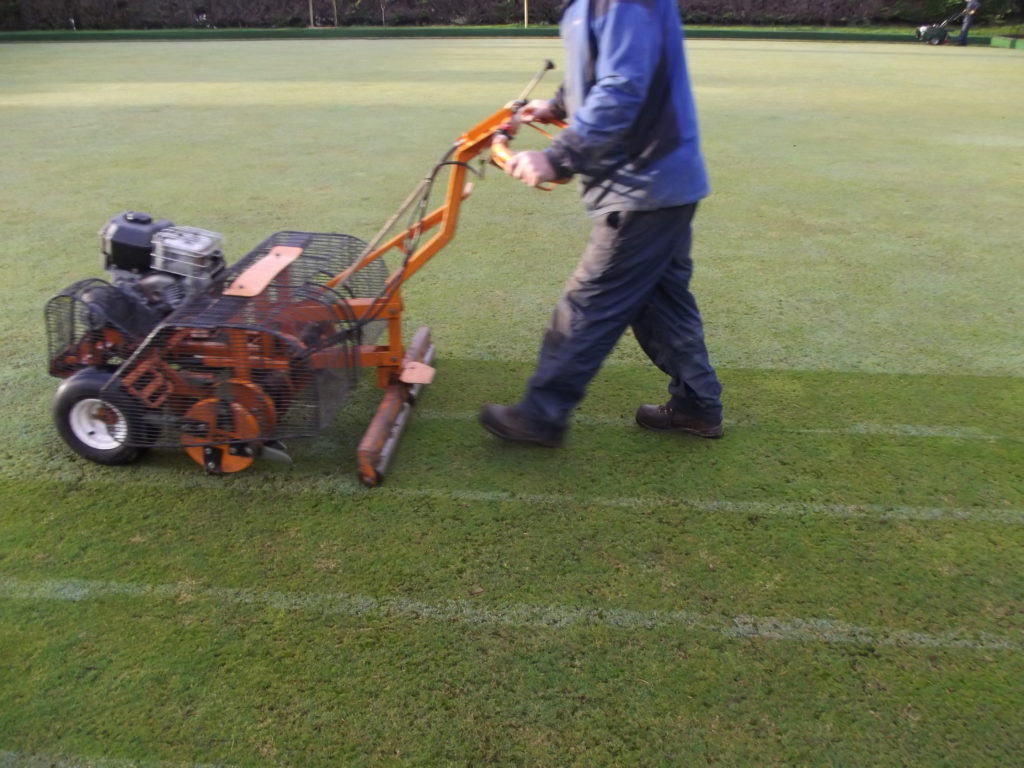
For generations, bowling clubs have talked about putting the green to bed at the end of the season. I think it’s one of the least helpful phrases in greenkeeping. The autumn renovation removed thatch, started to relieve the compaction caused by a full seasons bowling in tough conditions, opened the surface to allow the introduction of seed and rootzone improvementment materials, but all of that is just the start of the recovery process, not the end of the job.
The months between closing day and the start of the new season give us one of the year’s best opportunities to keep improving the green. Grass growth might be slower, but the green hasn’t stopped functioning. Soil is still wetting and drying. Nutrients are still moving. Roots are still respiring. Micro-organisms are still working. Worms are still active. Fungal pathogens are certainly still active.
Being There
In most parts of the UK, the grass isn’t completely dormant either. That’s why the most important winter greenkeeping job is remarkably simple: Just being there, walking the green, looking for problems, assessing recovery.
Regular removeal of dew and debris to keep the surface clean and hygenic is important, if sometimes tedious work. Keeping the grass height down to around 8mm with a sharp and properly adjusted mower is essential work.
Deep slit tining whenever soil and weather conditions allow, but at least once a month is voital work to ensure your green gets the benefit of the cumulative effect of regular deep aeration that doesn’t disrupt the surface too much.
During this slower period, watching for disease patches, moss, worm casting, poor drainage, weak growth and areas that remain wetter or drier than the surrounding turf is not only useful but educational for the greenkeeper. Always have your soil core sampler handy to look beneath the surface at any area that concerns you.
I can’t over emphasise the value of a simple soil core sampler and it’s regular use. Problems such as Localised Dry Patch (LDP) haven’t necessarily disappeared just because summer has. The brown grass might have gone, but the tendency towards hydrophobicity is a tough issue to fully correct and needs regular attention. Winter can mask LDP, only for it to return, apparently suddenly in the middle of the season when you can least afford to have a problem and at a time when treating it is way too late to get any kind of recovery within the playing season. In summer, our efforts to address LDP are often curtailed by the difficulty of getting enough water onto the turf without it evaporating. Winter provides us with copious rainfall and that can be a real game changer for the efficacy of the LDP correction materials we use. Use the winter rain to your best advantage when fighting persistent LDP problems on your green.
Winter is also the time to maintain plant resilience rather than waiting for disease or stress to tell us that something has gone wrong. A potassium boost around the shortest day is always welcomed by fine turf, especially on the overly sandy rootzones many greenkeepers are dealing with. Regular Phosphite and Protector applications support the plant’s natural defence response. Downcast applications where surface worm casting is troublesome and continued work on poorly wetting, sand-dominated rootzones with appropriate materials like Evolve G or Evolve LZT in mid winter if there are still areas of dry soil needing attention.
Keep an eye open for leatherjackets.
Winter is also an important time to watch for leatherjacket activity. These crane fly larvae feed on grass roots and crowns, potentially weakening the sward when growth and recovery are already restricted by low temperatures and shorter days. Mild, moist conditions can encourage feeding near the surface, while birds pecking or pulling at the turf may provide an early warning of their presence. However, birds aren’t proof of an infestation, so investigate before jumping to conclusions. Regular inspections, checking beneath suspicious areas of turf and maintaining a healthy, resilient rootzone will put you in a much better position to recognise and manage problems before spring. As ever, prevention and observation beat panic and pesticides.
Being there is the best winter programme
Products simply help us achieve particular objectives within it. Your presence and curiosity are the most valuable actions. The greenkeepers who use winter properly aren’t trying to force their greens into unnecessary growth. They’re quietly watching and tweaking to achieve the best conditions to allow a healthy green to emerge naturally as temperatures and light levels increase in spring.
Slow, regular vigilance and small tweaks through the winter months, taking care of the small jobs, keeping the grass cut to 8mm will always beat any attempt at a desperate recovery programme three weeks before opening day. A green that has been moving in the right direction all winter. Spring starts now with the winter work, so when spring comes, you can get right onto opening day preparations with no alarms and no surprises.