Home » Articles

Fungi, the Bogeymen?

Mycorrhizal Fungi

The highly sandy nature of many bowling greens and the historical routine use of fungicides of course means that the fungal community is at best compromised. However, we can encourage they're development by providing bio-stimulants. These are typically long-chain sugars such as—kelp, humic acid, and molasses derived bio-stimulant materials. In fact, trials have shown that spraying Trichoderma fungi (a natural Fusarium suppressor) with 20 litres of a biostimulant such as Molturf per hectare extended its protective activity for over five weeks. Even at lower rates, molasses is a highly effective and underutilised biostimulant.

Read more

The thatch dilution delusion

thatch dilution delusion

The thatch dilution delusion...discuss. Can thatch be diluted? If so, is there any benefit in doing so? As with many aspects of modern greenkeeping that have been accepted as fact without evidence, the claims for top-dressing's ability to dilute thatch fly in the face of the science.

Read more

Fusarium. Why It’s Getting Worse, and What to Do About It

Fusarium

Over the last few decades, routine applications of fungicides, high-salt synthetic fertilisers and ever-increasing topdressings of sand have left many UK greens biologically bankrupt. I see it time and again in soil analysis reports: textural classification coming back as just “Sand”. Very little in the way of silt or clay and sparse organic matter. No biological cushion.

Read more

Fix your bowling green step 3

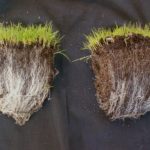
Root mass is important for a healthy bowling green

In parts 1 and 2 of this series on how to fix your bowling green, we discussed the process and importance of taking regular soil profile samples and discovered what the soil sample can actually tell us about the condition of the green. In part 3 John links this to demonstrate why each of the visual signals from the soil sample point clearly to one or more of the multitude of issues we experience on poorly performing greens. From disease outbreaks to skinning of heads and bad runs on rinks, the humble soil profile sample can tell us a lot about where we're going wrong and point to the answers that will help us create a performance bowling green in the near future.

Read more

Fix your bowling green step 2

Thatch Layer

In this article we take the soil samples you removed in Fix your bowling green Step1 and look more closely at them to discover what's going on under your green. This is one of the most valuable practices that any greenkeeper can undertake as it can reveal a wealth of information about the condition of your green that you could previously only guess at.

Read more