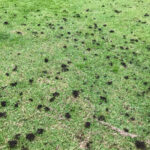
While many assume surface-casting worms are shallow dwellers, the reality is more complex. Lumbricus terrestris, for example, is a deep-burrowing anecic worm—it constructs vertical burrows up to 2 metres deep but returns to the surface to feed on organic debris, which it pulls into its burrow.
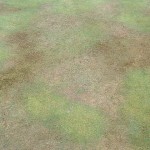
Localised Dry Patch typically rears its ugly head in June in the UK, but by then it is way too late to do anything about it. Once your green is displaying the large brown patches of desiccated grass and powder dry soil beneath, no amount of watering or wetting agent will bring it back fully this year. Now is the time to inspect your green and deal with it permanently.
This question is an amalgamation of upwards of 50 similar search queries on the site this month.
Essentially what these readers are looking for is a cure for Localised Dry Patch.
As regular readers will know, using the word “cure” in Bowling Green Maintenance is an example of “Symptoms Thinking”
Most problems that occur on bowling greens are symptoms of more fundamental problems and Localised Dry Patch is a case in point.
This is a relatively recent addition to the list of difficulties greenkeepers have to deal with in maintaining bowling greens.
I won’t go into a long description of the problem as that is well documented on the site elsewhere (just click on the LDP tag on the right of the page to go to articles about Localised Dry Patch).
The main thing is to get away from thinking of LDP as something that can be cured; it isn’t a disease; the answer is to change your maintenance practices overall to make sure it doesn’t occur.
This means creating a healthy living soil environment by:
Increasing air within the soil
Minimising thatch
Minimising compaction
STOP using sand-top-dressings
Increase microbial activity in the soil
Firstly by doing 1-4 above
Then helping to improve conditions through use of bio-fertilisers
Use wetting agents in the meantime to help with soil re-wetting
Keep the green surface open throughout the season by using a sarrell roller.
A complete explanation and detailed step by step guidance is included in Performance Bowling Greens, a practical guide
During dry and hot weather the need to water your green properly can't be over emphasised. Although it can be tempting to let the green burn to achieve speed, this can turn to disaster and cause the green to fail later in the season.
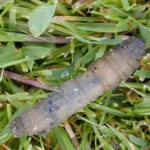
TL;DR: Greenkeepers are facing increasing challenges due to climate change, outdated practices, and pest infestations. While Chlorantraniliprole-based insecticides might offer a quick and temporary fix, they disrupt soil microbiology and pose environmental risks. The withdrawal of pesticides, however, presents an opportunity to work smarter and in harmony with nature.
Chitin, found in insect exoskeletons and fungal cell walls, plays a crucial role in soil health. When broken down into chitosan, it enhances plant growth, improves soil structure, and stimulates beneficial soil microorganisms. However, conventional greenkeeping can disrupt these natural processes, leading to a deficiency of beneficial substances like chitosan.
By reducing reliance on artificial inputs and reintroducing natural substances like chitosan, we can restore the soil's natural balance and promote healthier, more resilient turf. Chitosan enhances plant growth and productivity through soil conditioning, plant health stimulation, microbiological associations, biocontrol, and bioremediation. Thus, chitosan plays a multifaceted role in the soil ecosystem, contributing to soil health, plant growth, and disease and pest resistance.