
Over the last 16 years since I started Bowls Central, I have had contact with hundreds of UK bowling clubs and approximately 90 per cent of these have greens with fairly serious problems caused by the excessive, routine and unquestioned application of sand top-dressings over several decades.
I have written extensively on the agronomic folly of this practice elsewhere on the site and in my magazine articles so I won’t go over that again here. However, I will leave links to the most relevant of these articles at the end of this post if you want to review these.
Is it OK not to top-dress?
The short answer to this is YES: it is perfectly fine to stop top-dressing your bowling green, and it’s actually urgent if your green is already beyond Peak Sand. Whatever you do, you must always make these decisions based on the current Soil Texture of your green’s rootzone. It’s easy to find out what this is with a soil analysis that includes soil textural analysis.
How will we level the green without top dressing every year?
This is a common question based on the flawed assumption that routine top-dressing is essential for greens to remain level. However, many clubs have been applying top-dressing for decades and still don’t have a level green. Yet for reasons of tradition, the green still requires top-dressing every year in an effort to correct this. In the face of the obvious problems like localised dry patches, disease, and untrue/unpredictable surfaces being suffered by many clubs now, due to excessive sand in the root zone, maybe it’s time to ask:
Why is the green still not level after all of these years?
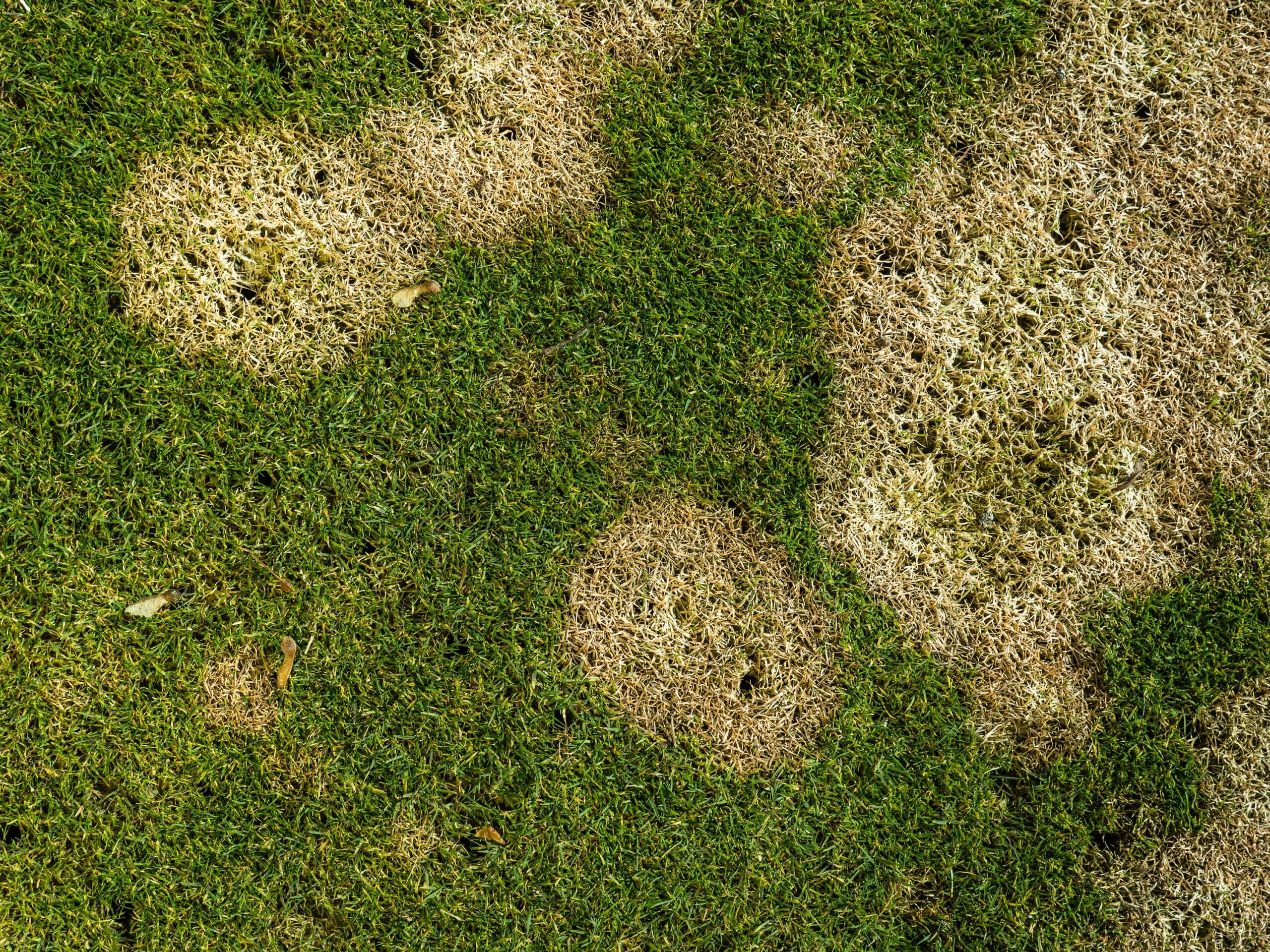
The main cause of an uneven, unpredictable green surface is the uncontrolled proliferation of thatch build-up due to a host of problems that drive the life out of the Soil, such as excessive sand, routine fungicide applications and the long-term use of high-salt industrial fertilisers. Thatch build-up in these conditions is inevitable and can expand and contract randomly in new spots every day depending on prevailing weather and atmospheric conditions. Trying to top-dress these random anomalies out is futile.
But Golf Courses Still Top Dress!
This is another common argument or attempted justification for continued application of sand top-dressings. However, for the purposes of dealing with the problems facing a great many UK bowling clubs due to the overuse of sand, we can consider Golf and Bowls as sports that long ago had a common greenkeeping ancestor. In terms of budgets, skills, equipment, labour availability and professional support, we can usefully consider these to have followed different evolutionary paths and that they are now two distinct species of greenkeeping for the most part.
Building your Greenkeeping Knowledge and Confidence
Here we come up against one of the most urgent problems facing bowling clubs. The greenkeeper who understands these issues must have the confidence to stand against a barrage of myths and hearsay. Hearsay is such an appropriate word here, as much of the problem is based on things people with little or no greenkeeping knowledge or skill have heard others say who are similarly unqualified to comment on the subject. This is how damaging practices are perpetuated. Top dressing has become a ritual, a bit of an offering to the great god of the greens to ensure a good green next year.
Due to the above, resistance to any effort to stop top-dressing is often strong, so clubs explore all sorts of side roads to make sure the ritual is upheld, and the most common of these goes something like this:
What if we use a 50/50 sand/soil mix instead of 70/30?
That sounds reassuring. The club has made a sensible compromise. Not too sandy. Not too heavy. A nice balanced material. But the name on the bag, or the name on the invoice, is not the important bit. The important bit is the Particle Size Distribution.
Yesterday, I looked at a well-known supplier’s 50/50 top dressing mix. The label says it is a half sand, half soil product and technically, it is. However, the PSD analysis is quite revealing. The clay and silt content is only 0.2%; it had a gravel (something that shouldn’t appear in any top-dressing) content of 0.4%. The remainder was, of course, sand.
The problem is that when we talk about Soil, it is often overlooked that Soil is also mostly sand in most cases. So, in the product above, although the manufacturer has likely made and sold it in good faith as a 50/50 mix, the material is 99.4% sand as supplied. And if you remove the gravel (which really should have been screened out anyway) from the calculation and look at the fine earth fraction (the soil mineral fractions commonly measured in sports rootzones, i.e. Sand, Silt and Clay) the bit that actually counts in soil texture terms, it is roughly 99.8% sand.
It’s worth repeating, a so-called 50/50 dressing can still be practically pure sand. That is not a minor detail. That is the whole point. If a bowling green already has a very sandy rootzone, and we keep adding material that is 99% sand, we are not improving its Soil.
We are making it sandier, reducing its ability to hold water and nutrients. We are making the green more dependent on irrigation, fertiliser and emergency rescue work during hot, dry weather. The problem is not that clubs are buying the wrong brand or fractional grade of dressing. The problem is that too many clubs are continuing to apply sand top-dressing when their green rootzone is already too sandy from years of similar applications.
70/30, 60/40, 50/50 or even 0/100 can still be mostly sand. Fractional classification is not a suitable way to sell these materials. To get a better idea of what you are buying, you can ask “How much actual silt, clay, organic matter and functional soil-building material is in it?”, but the better questions are “do we actually need to spend this money at all?” and “Is this helping or hindering the condition of the green?”
The Climate Change Catalyst
The extreme weather episodes we are seeing more regularly now due to climate change are serving as a wake-up call to many clubs. Through the Bowls Central Academy, you can access help to start to get your green back on track and heading towards a more resilient surface that can better cope with extremes. If you have questions or need help with green problems, feel free to drop me a line.
we hade green relaid five years ago never top dressed since relaying. do you think hollow coring will benefit our green this end of season if so how could we replace the core holes. when the green was relayed we were recommended the seed to use was dwarf rye grass was this correct. or should we add a different type of grass seed.
Hi Raymond
Much of this will depend on the current condition of the green and any problems you are having, the rootzone material used and the original grass sown when the green was rebuilt. You can send me more details and photos etc using the contact form
John