Home » Articles

Over-seeding Fact and Fiction

Another very popular subject on this site is over-seeding of greens in Autumn.

Over-seeding is commonly carried out as part of the autumn bowling green maintenance and renovation program and is very often a disappointment.

You would expect this work to quickly fill in the bare patches and spaces in the sward left by  disease, localised dry patch and a host of other green problems, but this is very often not the case…why?

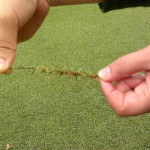
The answer to most disappointing results from over-seeding is “competition”. Competition from the mature, indigenous grasses whether fine or weed grasses like annual meadow grass usually reduces the success or survival rate from over-seeding to a very small percentage.

This quite often comes as a surprise to greenkeepers who have observed a very good “take” shortly after seeding (7-14 days). At this early stage it is not uncommon to see vigorous lines of dense new seedlings bursting forth from the green. This however, is usually a false reading.

At this very Read more
Grass Identification on the Bowling Green

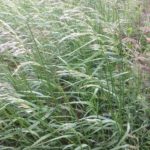
Grass Identification

Grass identification is a key skill for the greenkeeper and over at the Bowls Central Academy the students have been spending a fair bit of time recently finding out about that and all of the things that can go wrong on and under the green. They have then applied this learning to their own greens to enable them to develop a sound maintenance and renovation program for their greens.

This post is only available to members.

Read more

Mair Sand

mair sand

"Mair sand" was the call from Tom Morris the most famous and respected greenkeeper of them all, but have we misunderstood him? In reply to an article about fine, firm golf greens John Quinn highlights the similarities between the plight of golf and bowls greens and clears up the apparent contradiction between modern day problems with inert greens and the Tom Morris philosophy.

Read more

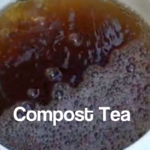
Compost Tea Quick Start Guide

Compost Teas

Compost Tea is a home made spray that is applied to fine turf to increase the micro life in the soil. It reintroduces missing microbes and boosts the populations of all of the main beneficial microbe groups such as bacteria, protozoa and the all important Fungi. Some of these help to degrade thatch, turning it into valuable humus, giving life and body to the depleted and often excessively sandy soil in many bowling greens.

Read more