
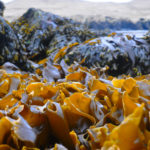
Beyond plant growth, seaweed feeds the microbial community that underpins a healthy green. Polysaccharides like laminarin and fucoidan stimulate beneficial soil microbes, improve aggregation, and enhance nutrient cycling.
Beyond plant growth, seaweed feeds the microbial community that underpins a healthy green. Polysaccharides like laminarin and fucoidan stimulate beneficial soil microbes, improve aggregation, and enhance nutrient cycling.
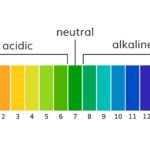
As standard soil analysis offerings are generally obsessed with chemistry, a very low pH is often interpreted as a chemical imbalance, which, of course, it is. The question of why those acid cations are dominant on the soil colloid, remains unaddressed in most cases. Instead it seems that many advisers are jumping straight to the temporary, artificial correction advice to add lime, and as we have seen, for fine turf, that can be dangerous advice.
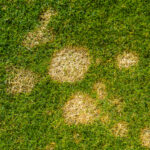
Over the last few decades, routine applications of fungicides, high-salt synthetic fertilisers and ever-increasing topdressings of sand have left many UK greens biologically bankrupt. I see it time and again in soil analysis reports: textural classification coming back as just “Sand”. Very little in the way of silt or clay and sparse organic matter. No biological cushion.
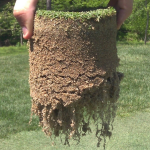
In parts 1 and 2 of this series on how to fix your bowling green, we discussed the process and importance of taking regular soil profile samples and discovered what the soil sample can actually tell us about the condition of the green. In part 3 John links this to demonstrate why each of the visual signals from the soil sample point clearly to one or more of the multitude of issues we experience on poorly performing greens. From disease outbreaks to skinning of heads and bad runs on rinks, the humble soil profile sample can tell us a lot about where we're going wrong and point to the answers that will help us create a performance bowling green in the near future.
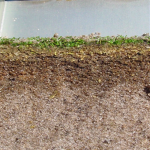
In this article we take the soil samples you removed in Fix your bowling green Step1 and look more closely at them to discover what's going on under your green. This is one of the most valuable practices that any greenkeeper can undertake as it can reveal a wealth of information about the condition of your green that you could previously only guess at.