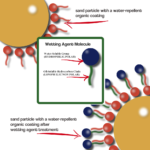
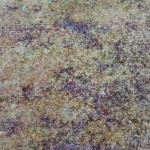
The management of bowling greens often presents complex challenges, one of the most prevalent being the occurrence of localised dry patch (LDP) due to hydrophobic soil conditions. Addressing this issue effectively is crucial for the health and performance of your green and wetting agents have emerged as a key tool in this endeavour.
However, concerns have been raised about the potential toxicity of commonly used chemical wetting agents, leading to a call for safer, more environmentally friendly alternatives.
Only Academy Members can access this post. If you are an Academy Member, please log in to access the full post.
Some wetting agents are made from harsh chemicals that can be harmful to the environment and potentially toxic to humans and animals. However, wetting agents made from biodegradable and environmentally friendly ingredients are available. These products are designed to be safe for use around people, pets, and wildlife, and they break down naturally in the soil over time, leaving no harmful residues behind.
Bowling clubs are susceptible to any expert who comes along claiming to have a quick fix, usually in the form of a product that claims to eat thatch or cure dry patch and of course it is never as simple as that. However, these small, under resourced clubs will often choose the seemingly fast track solution over the reality of the hard slog to physically reduce thatch and start to bring life back to the soil over a longer period. As part of this, the annual ritual of top-dressing, with its rather dramatic appearance including lots of hands on deck, big bags of stuff to man-handle and the general drama of the event for a small bowling club, engenders the belief that this “surely must be doing a lot of good?” In this way, top-dressing has become a tradition at most clubs, almost a talisman, an offering to the great god of the greens to ensure good performance next year. When the good performance is short lived or even absent, the blame is always laid somewhere else, never with the top-dressing. This inevitably results in the greenkeeper being fired and the next expert being wheeled in to scatter his magic dust.
Understanding your greens soil analysis report isn't always at the forefront of thought of those who instigate the soil test. Too often it is merely a fertiliser sales tool with the advice given taking very little notice of the results received.
Greens soil analysis results are often confusing and use terms that are not easily understood in relation to greenkeeping practice. In this article, John sets out to change that by taking apart a typical greens soil analysis report and explaining it in terms we can all understand. More importantly it relates the results to maintenance.
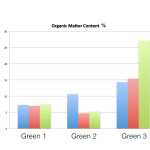
Bowls green performance and organic matter go hand in hand. In this article we continue to test our hypothesis about the effect Organic Matter has to bowls green surface performance. John compares the different kinds of organic matter in greens and shows how we can measure these to direct us to a better maintenance regime that focusses on performance and produces healthier greens and greens that are more economical to maintain.