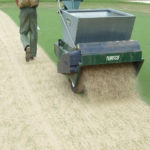
From the very beginnings of the game of bowls, most clubs bowled on a green constructed largely of local top soil, built, prepared and seeded by the club members, perhaps with the help of a local gardener or farmer. Maintenance was largely mowing, turning the rinks on flat greens, keeping the surface clear of debris and worm casts and an occasional roll before a big match. In the autumn, a squad of members would descend on the green with forks to aerate or spike the green, before putting it to bed for the winter with a final cut and perhaps a bag of fertiliser.
Another popular subject this month has been Winter Mower Servicing and in particular what you should expect of your local service workshop.
There have been many tales of work not being done properly and overcharging for service. Here is the minimum that you should expect to be included in a quote for winter service:
Full engine service including checking electrics, starting mechanism, new spark plug, all filters and oil change.
Replace bottom blade (new blade ground-in first)
Re-grind (not back lap) cylinder
Check roller bearings and advise if worn (adjust if possible)
Re-set cylinder to bottom blade clearance and check for even cut
Re-set mowing height to that specified by club.
Treat and touch up paint on any areas of rust
Check and adjust clutch settings
Check belts and replace if worn
Check Groomer and re-set to height specified by club
Check and adjust chain tensions
Lubricate all points
Free off and lubricate all adjustment mechanisms and check for proper operation
Check all cables for wear and replace/re-adjust as required
This is a minimum list and your particular brand of mower might have further items that will need to be checked. Check the manufacturer’s handbook for details, or better still request a winter service checklist from your local dealer.
Now is the time to check that this has all been done properly, not when you are half way across the green with a broken down mower on opening day morning!
Understanding your greens soil analysis report isn't always at the forefront of thought of those who instigate the soil test. Too often it is merely a fertiliser sales tool with the advice given taking very little notice of the results received.
Greens soil analysis results are often confusing and use terms that are not easily understood in relation to greenkeeping practice. In this article, John sets out to change that by taking apart a typical greens soil analysis report and explaining it in terms we can all understand. More importantly it relates the results to maintenance.
Today, we will look at two mechanisms of turfgrass physiology that are active in our grass plants and soil and that follow this tendency towards equilibrium, without which our turf wouldn't be able to grow and thrive.
Each of the grass plants in our green is akin to a little factory where Carbon Dioxide and Water are broken down and converted to a sugar based plant food that can be used immediately to fuel the plant's growth processes or converted to starch and stored throughout the plant for future use.