
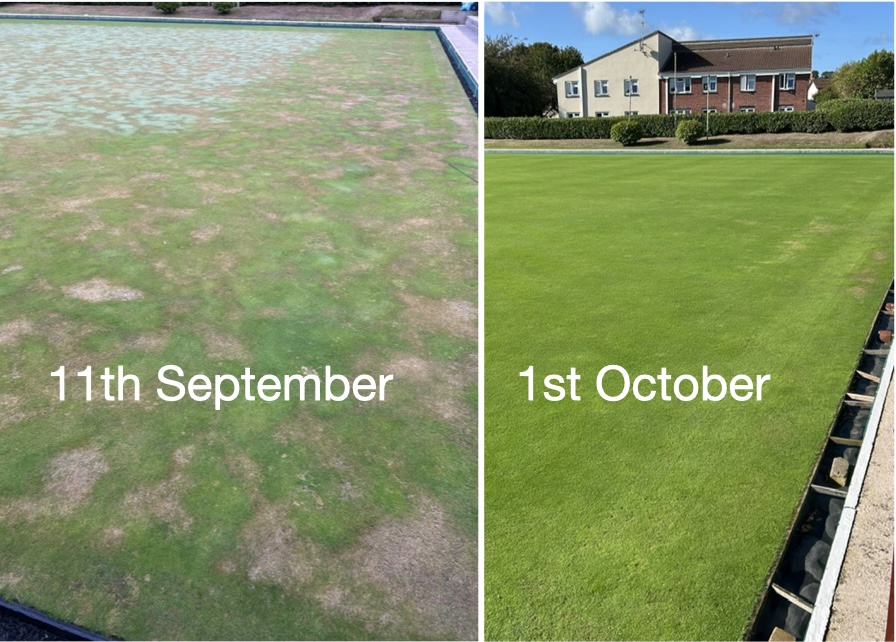
What have bowling greenkeepers been up to this autumn? We asked Bowls Central readers to share their renovation photographs and experiences, and the results provide a fascinating glimpse of the work going on behind the scenes at bowling clubs.
Every autumn, bowling greens across the country become temporary building sites.
Scarifiers, hollow-tiners, brushes and seed spreaders are wheeled out of sheds. Club members roll up their sleeves, and perfectly respectable-looking greens are suddenly transformed into something that might alarm the average bowler!
But there’s a purpose behind all this activity. Autumn renovation is an opportunity to address problems below the surface, encourage healthier grass growth and lay the foundations for next season.
Over the past few weeks, I’ve invited Bowls Central customers and readers to share photographs of their renovation work. Several have kindly responded, and I thought it would be useful to bring their experiences together.
Not as a competition, or a collection of perfect greens, but as a chance to see what other greenkeepers are doing, learn from their experiences and perhaps pick up a useful idea or two along the way.
A big thank you to everyone who has contributed.
Starcross & District Bowling Club – What a Difference Three Weeks Can Make!
Let’s begin with one of the most striking sets of photographs we’ve received.
On 11 September, Alan Brook’s green at Starcross & District Bowling Club was showing extensive areas of thinning and discoloured turf.
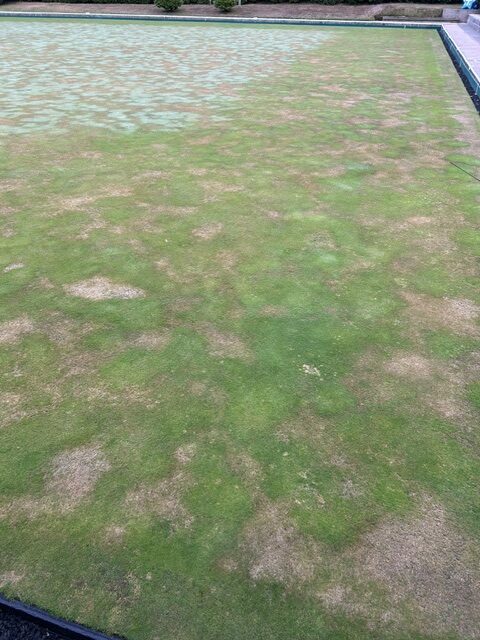
Alan started renovation on 14 September, hollow-tining and scarifying the green.
Over the following three days, he cut the turf to 5 mm using an older mower, mechanically brushed the surface and applied 120 kg of RZ Rootzone Improver, 15 kg of Evolve G and 25 kg of grass seed.
Everything was watered in, and Alan continued irrigating as the green recovered.
By 1 October, the photographs told a very different story.
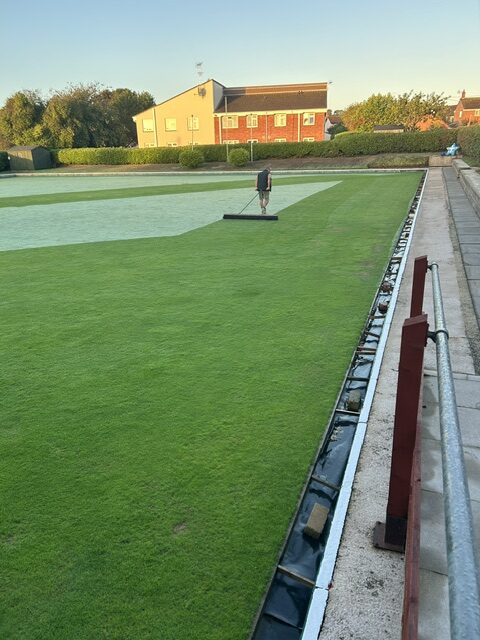
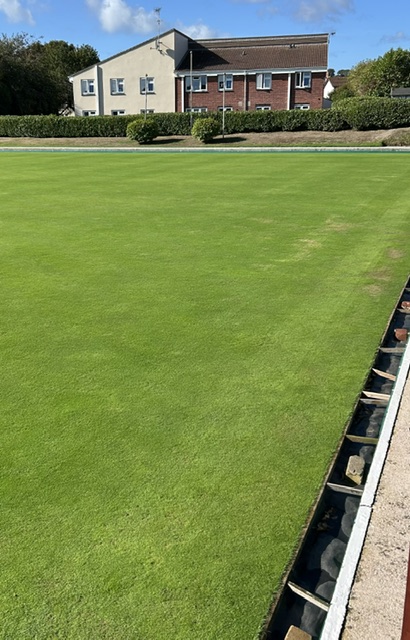
Following another cut on 3 October, Alan applied Protector.
He reports that the green is recovering very well, although the continued lack of rainfall has meant keeping up with the watering.
It’s an impressive visual transformation in just twenty days.
Of course, photographs alone can’t tell us precisely how much of that improvement comes from existing grass recovering and how much from new seed establishment. But the improvement in turf coverage and appearance is unmistakable.
It’s also a useful reminder that autumn renovation doesn’t finish when the machinery is put away. The care and attention provided during recovery can make all the difference.
Well done, Alan!
Cononley Bowling Club – Making Use of What You’ve Already Got
David Brown has sent us three photographs of the renovation work at Cononley Bowling Club.
Their programme included scarifying to 3 mm, spiking, overseeding and brushing in the seed.
The green was also hollow-cored, with the extracted cores subsequently spread across the surface using a drag mat.
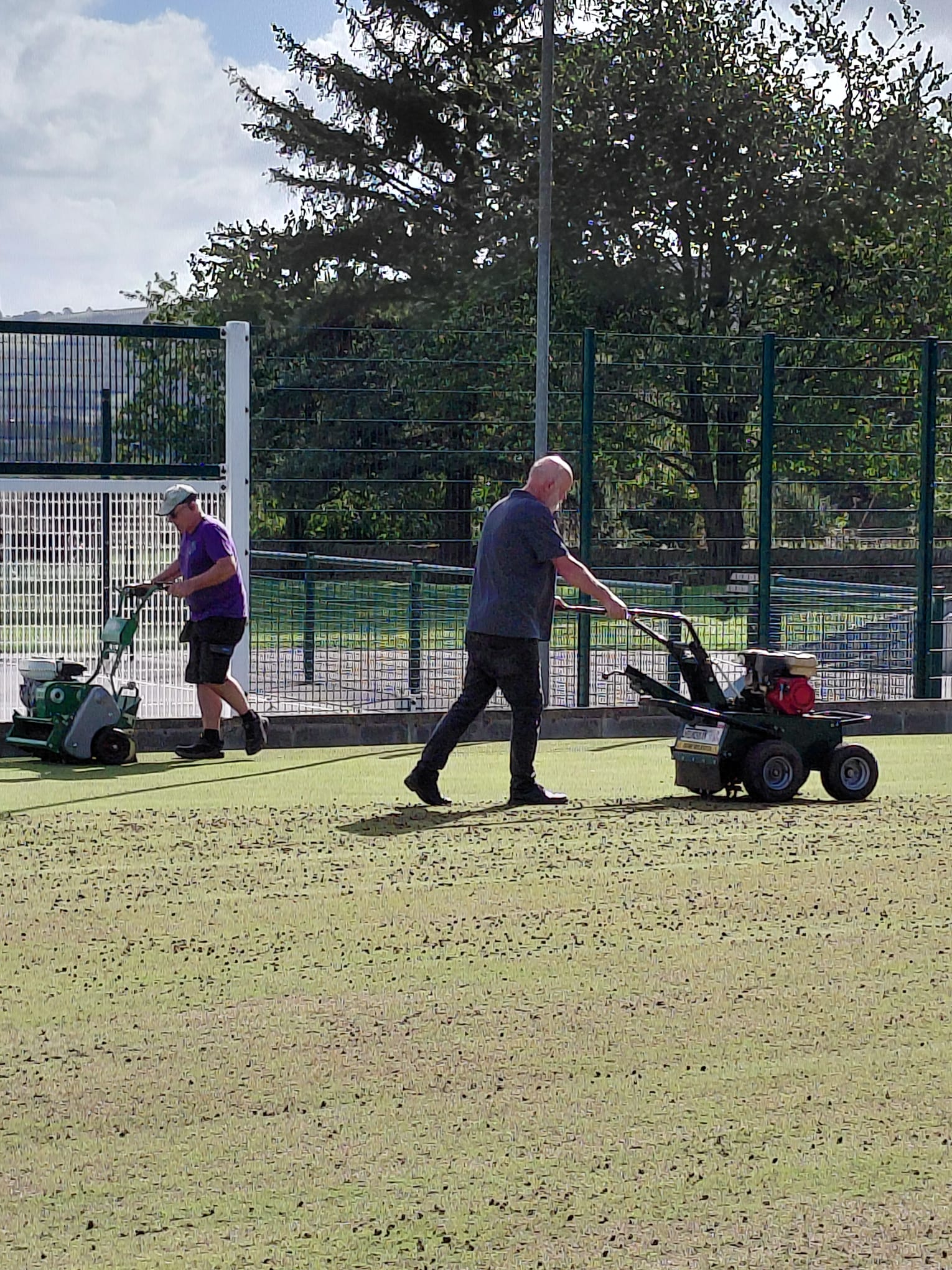
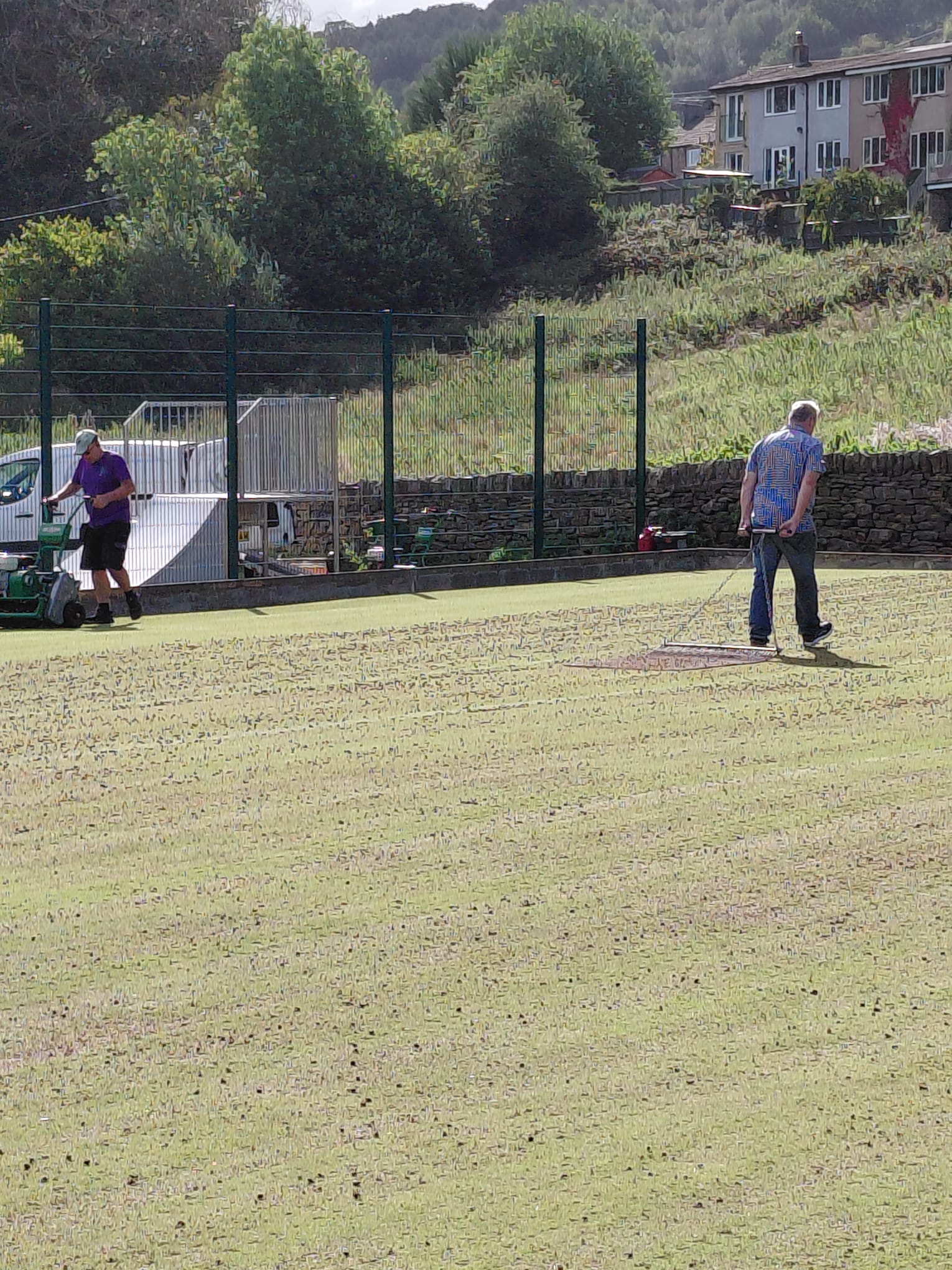
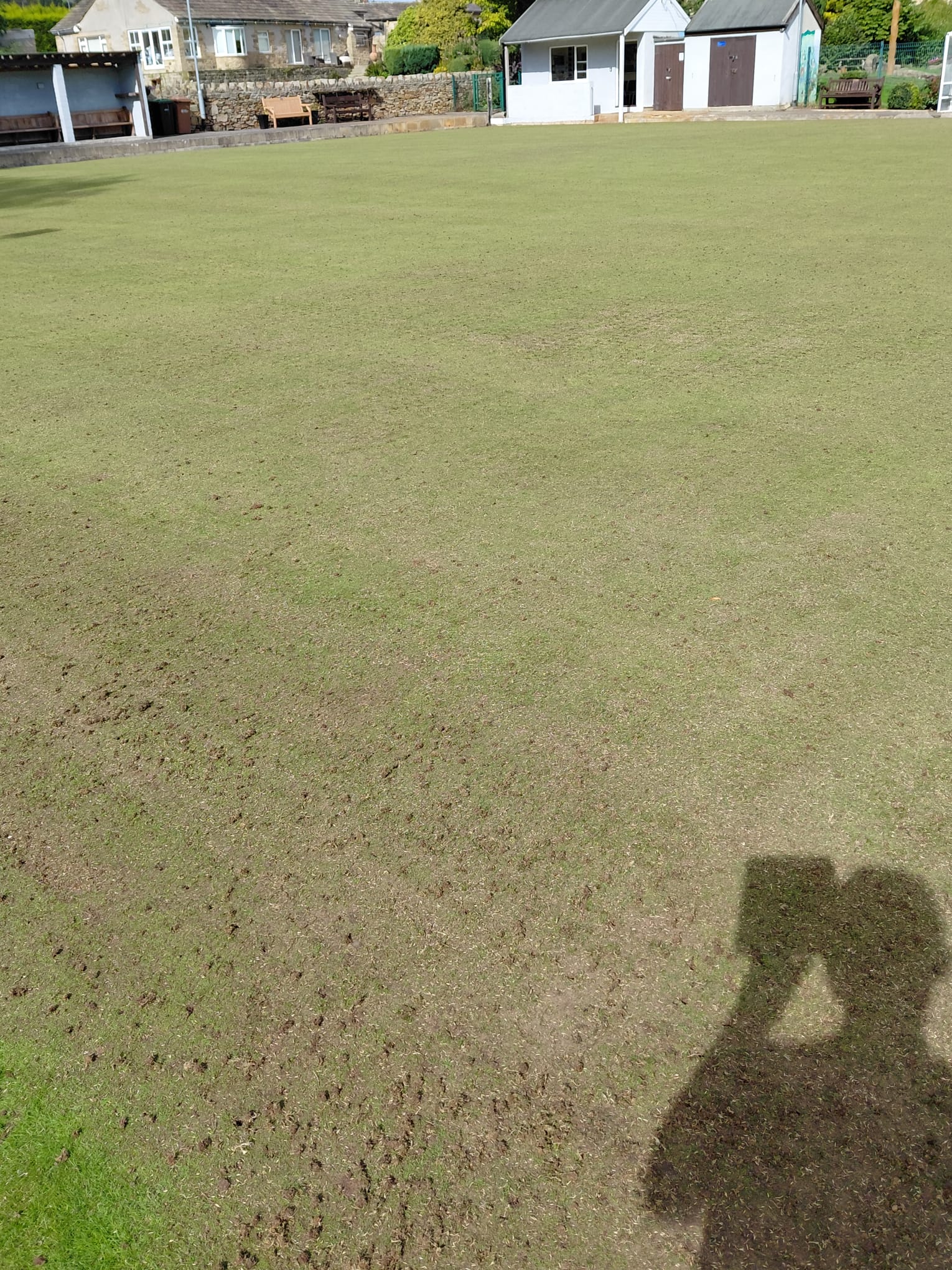
This is an interesting example of an approach we’ve discussed frequently at Bowls Central.
When a green is hollow-cored, the extracted material doesn’t automatically have to be regarded as waste. Depending on its condition and composition, it may contain perfectly useful soil that can be returned to the surface rather than discarded and replaced with imported material.
It’s a simple distinction, but an important one.
Thanks to David and the team at Cononley for sharing their work.
Lichfield Bowling Club – Many Hands Make Light Work
Phil Butler has provided four photographs showing the autumn renovation programme at Lichfield Bowling Club.
The green was hollow-tined, after which a verticutter was used to break down the extracted cores.
A team of willing helpers then brushed the material into the surface.
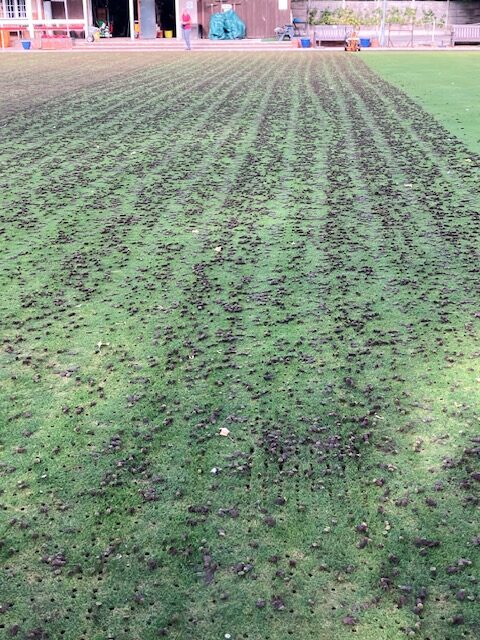
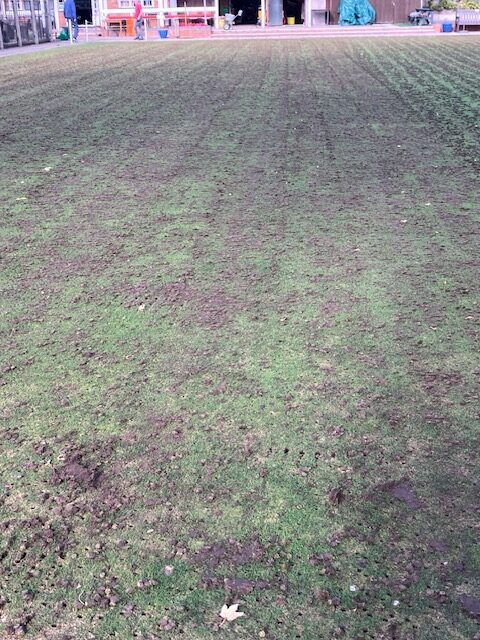
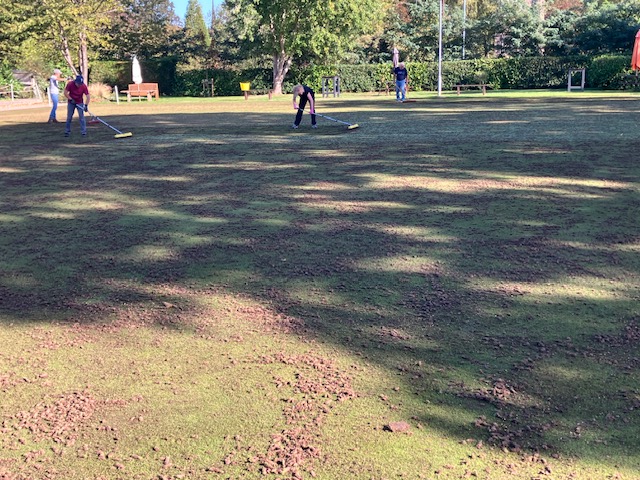
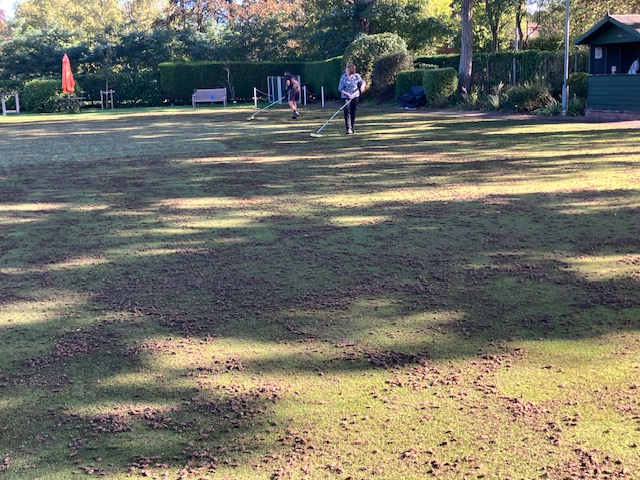
Phil also reports that the green received applications of gypsum and RZ Rootzone Improver, with overseeding planned for the following week.
What I particularly like about these photographs is that they show the people doing the work.
It’s easy to become absorbed in discussions about soil analysis, machinery and renovation techniques and forget that thousands of hours of unpaid work go into maintaining bowling greens every year.
Without the commitment of volunteer greenkeepers and club members, many bowling clubs would struggle to maintain their playing surfaces.
And although machinery can make the work easier, there’s still plenty of good old-fashioned physical effort involved!
Thank you to Phil and everyone helping at Lichfield.
On the Road with Ian Willson – NotDressing in Practice
Professional greenkeeping contractor Ian Willson has been particularly generous with his photographs, sharing examples of renovation work undertaken using the Bowls Central NotDressing approach.
These provide an opportunity to look a little more closely at some of the mechanical operations involved.
One of the central ideas behind NotDressing is that the soil already present in a green has value.
Rather than automatically removing existing rootzone material and replacing it with imported sand, we can consider whether that material can be retained, redistributed and improved.
This isn’t simply about saving money on topdressing. It’s about understanding what we’re trying to achieve below the surface.
Navigation Bowling Club
Ian’s photographs from Navigation Bowling Club show successive scarification passes and hollow-coring.
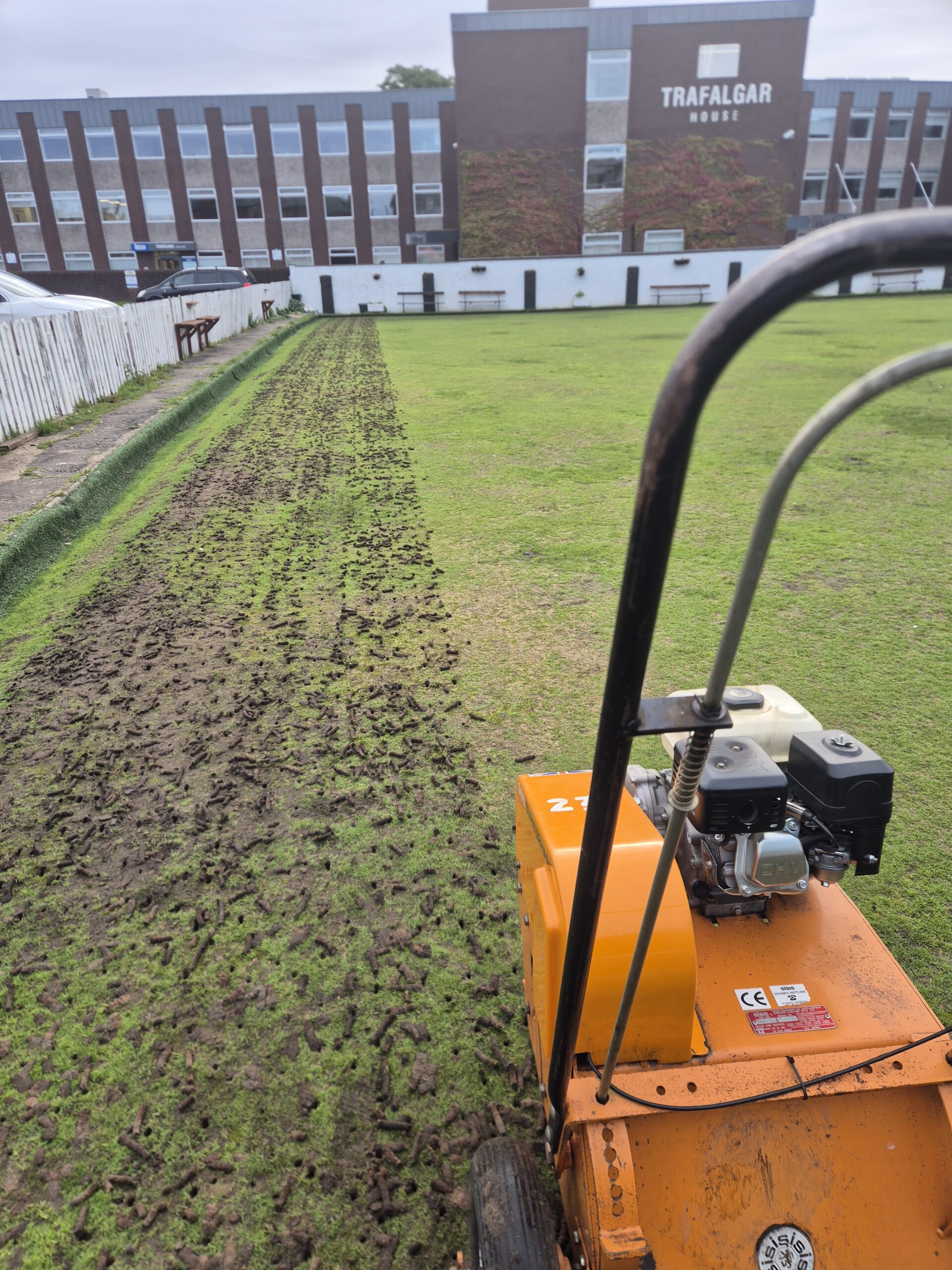
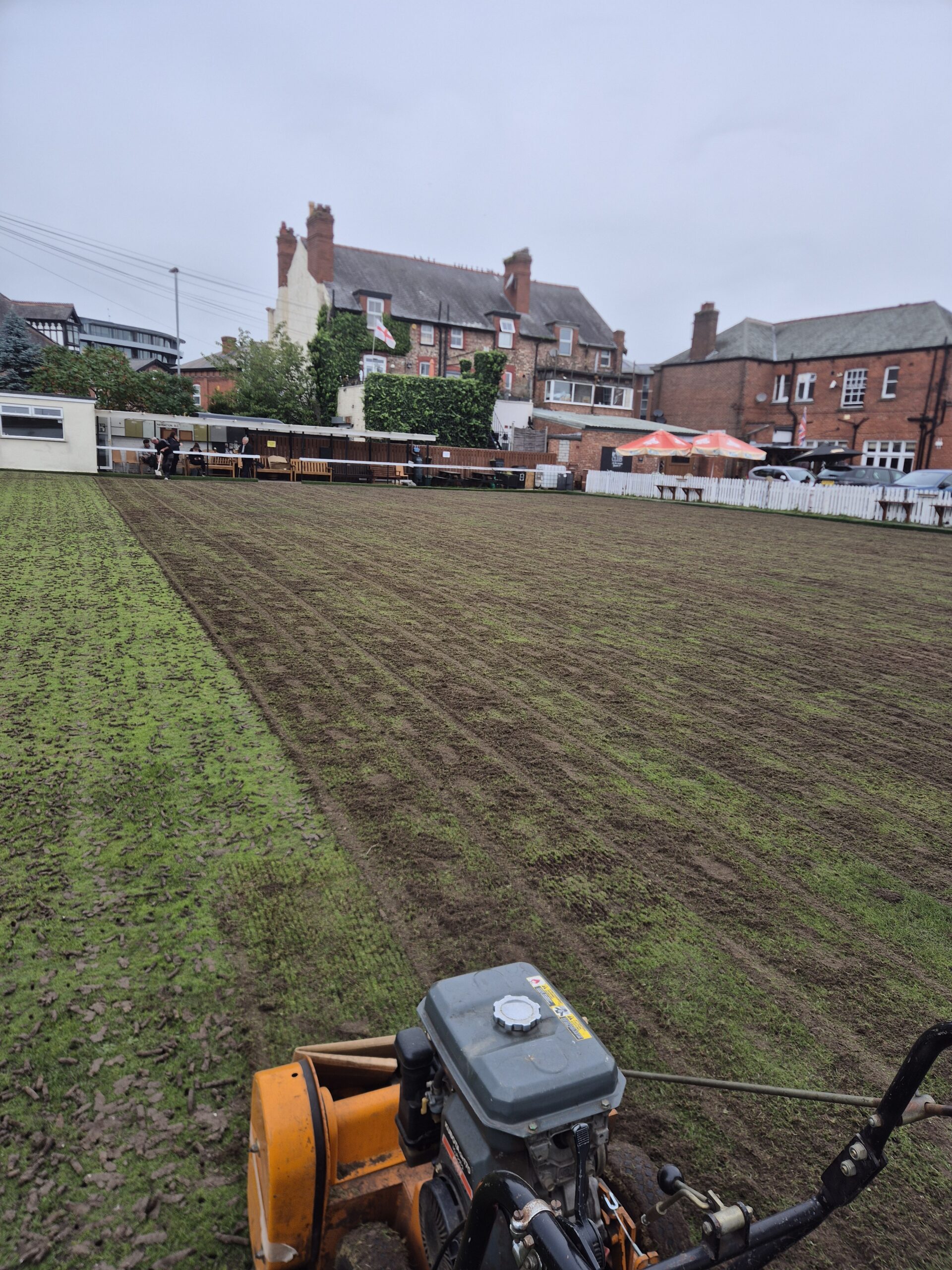
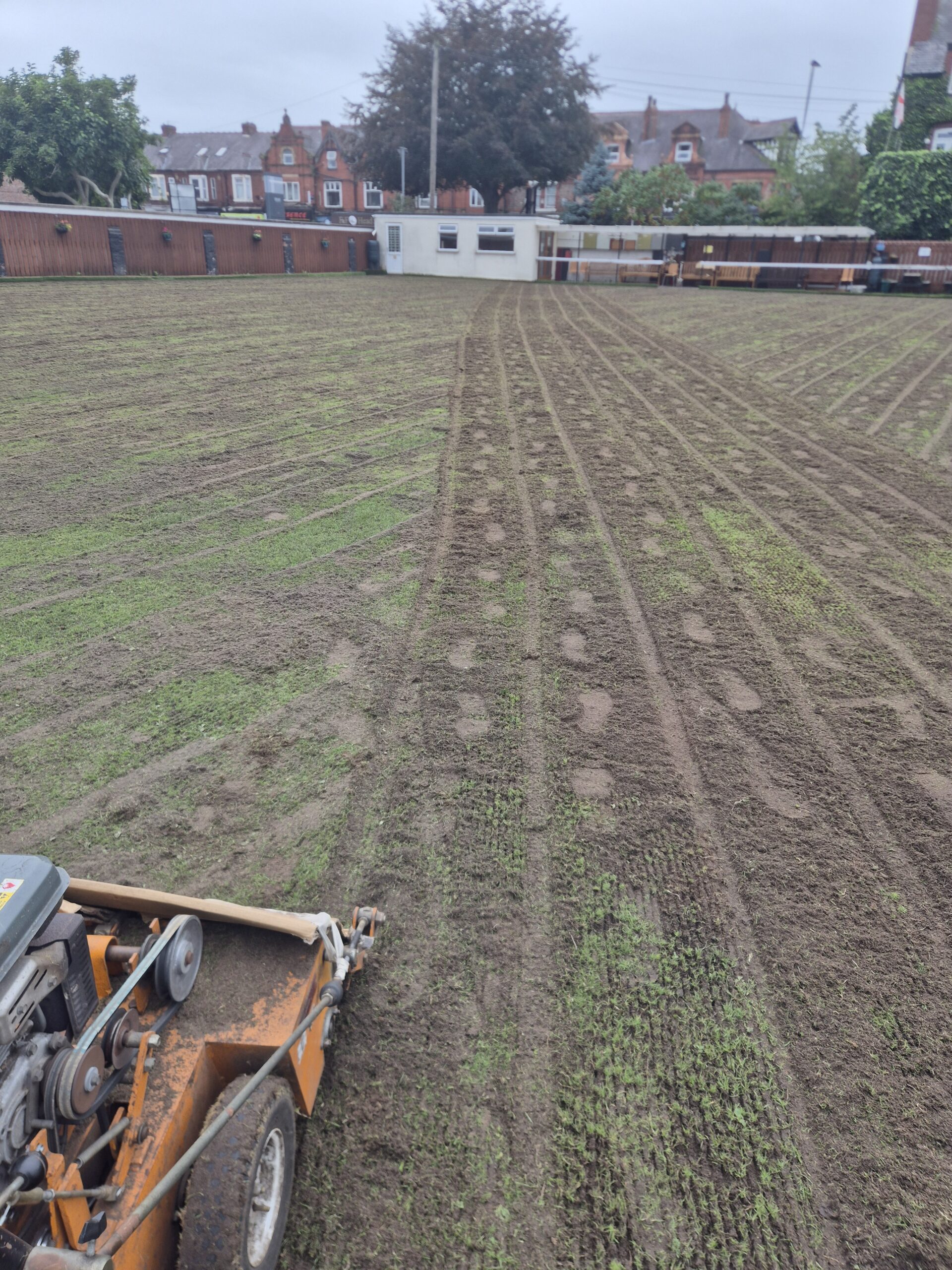
These are the sort of photographs that can make a bowler wonder whether the greenkeeper has finally lost the plot!
But a renovation programme isn’t designed to produce an immaculate-looking green on the day the machinery leaves.
The objective is to create better conditions for the grass to grow, develop roots and provide a healthy, resilient playing surface over the longer term.
Croquet Lawn – What Happens to the Cores?
Ian has also supplied an excellent photographic sequence from a croquet green.
Although bowling and croquet have different playing requirements, both depend on high-quality fine turf, and many of the underlying greenkeeping principles are shared.
The photographs show hollow-tining, scarification, breaking down the cores, drag-matting and subsequent recovery.
One of the most interesting stages is the process of breaking down the extracted cores.
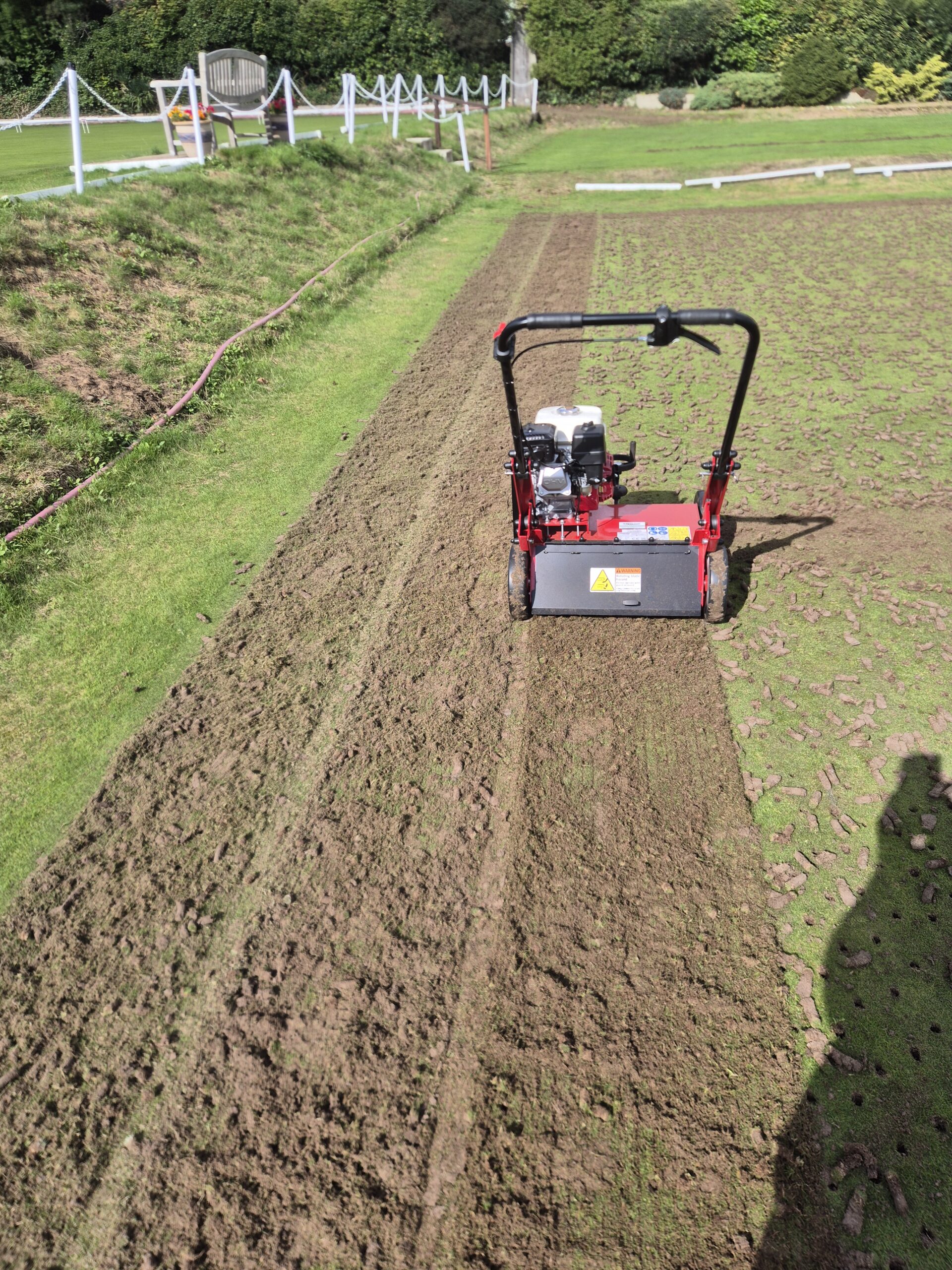
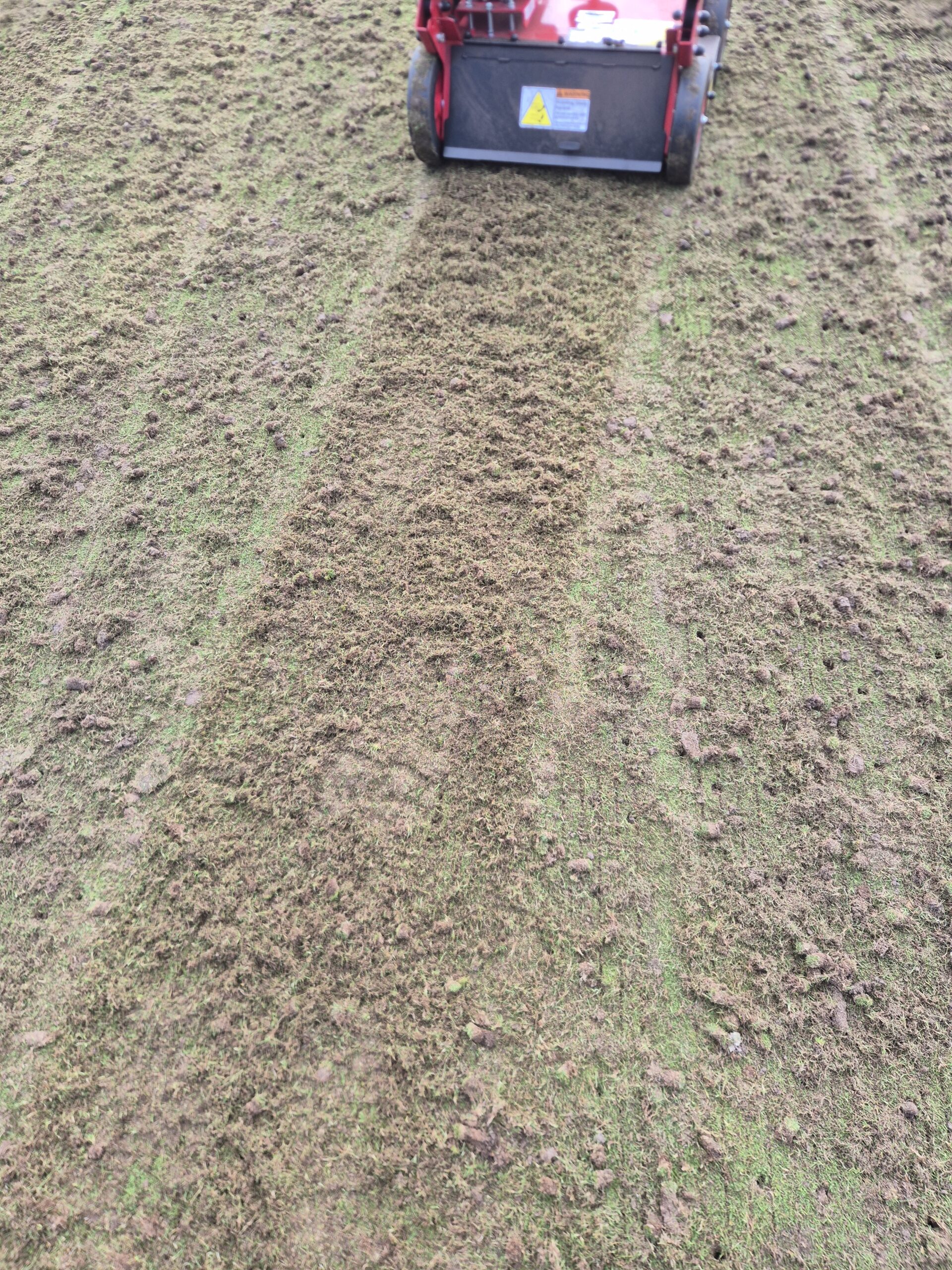
A hollow core can contain a mixture of mineral soil and organic material, including fibrous thatch.
These aren’t necessarily things we want to treat in the same way.
The mineral soil may be worth retaining, while excessive fibrous material can be separated and managed.
Rather than automatically throwing everything away, the aim is to make better use of what’s already there.
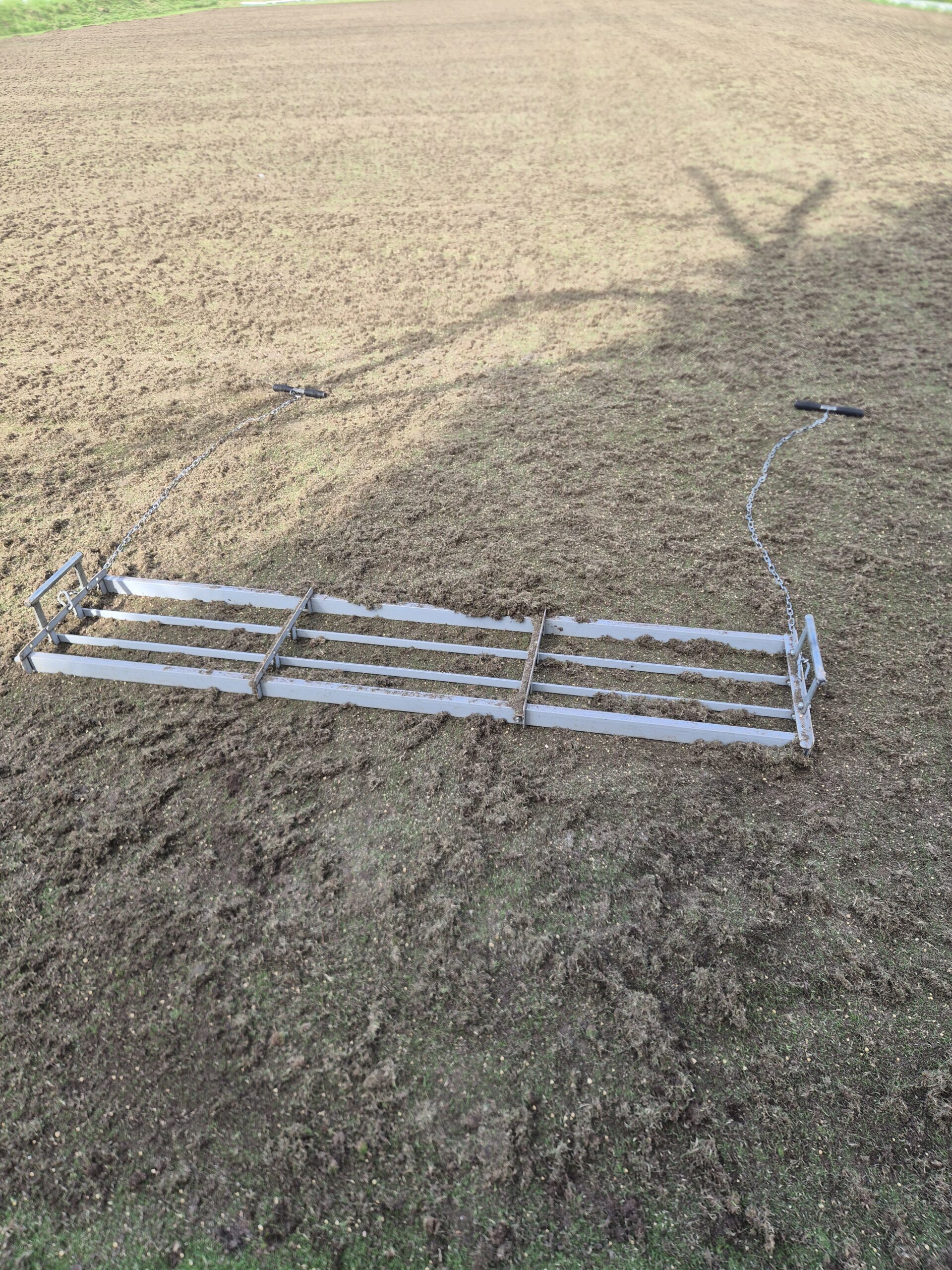
The subsequent recovery photographs are particularly encouraging. These are at 1week and then 3 weeks after renovation
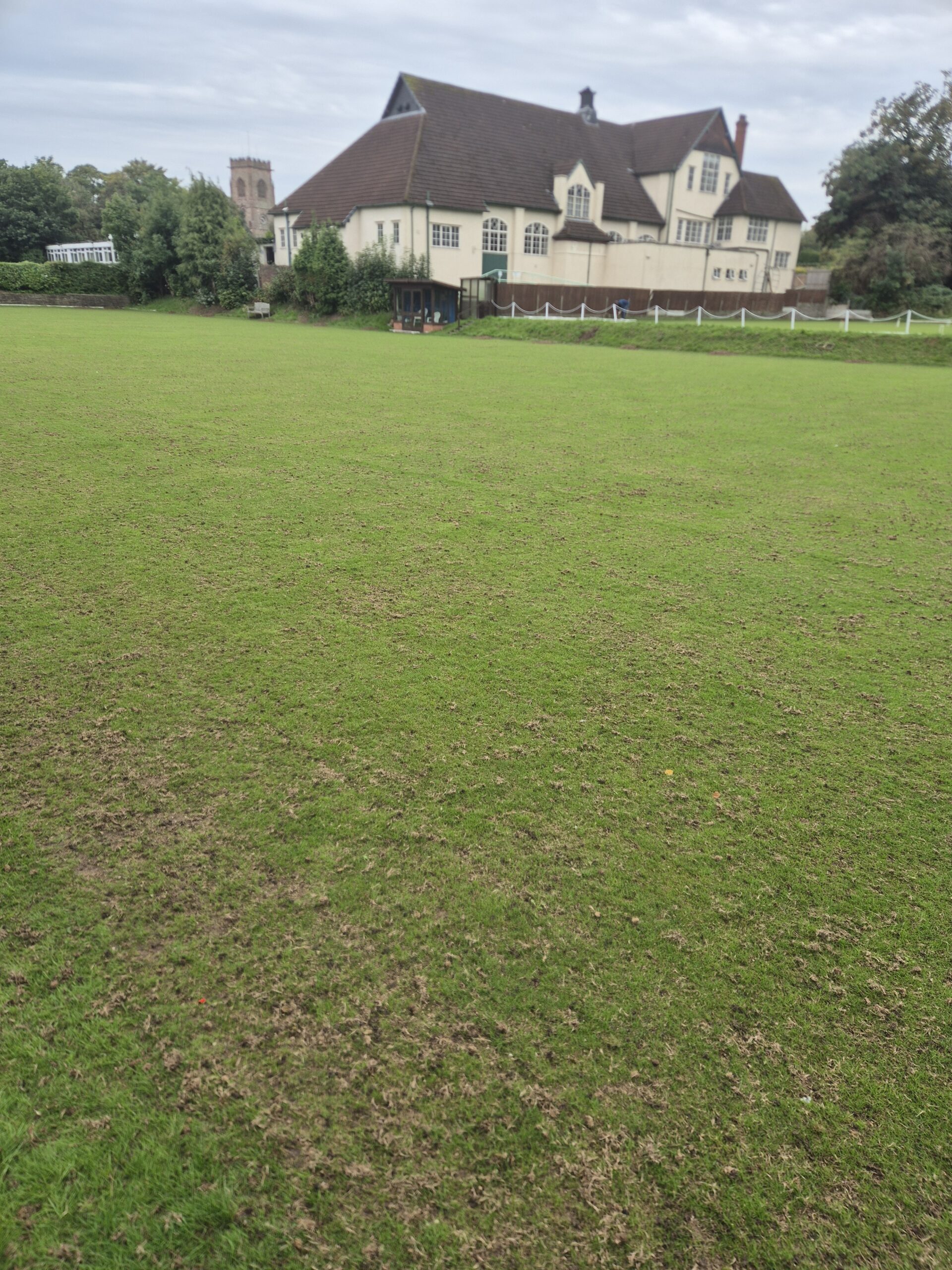
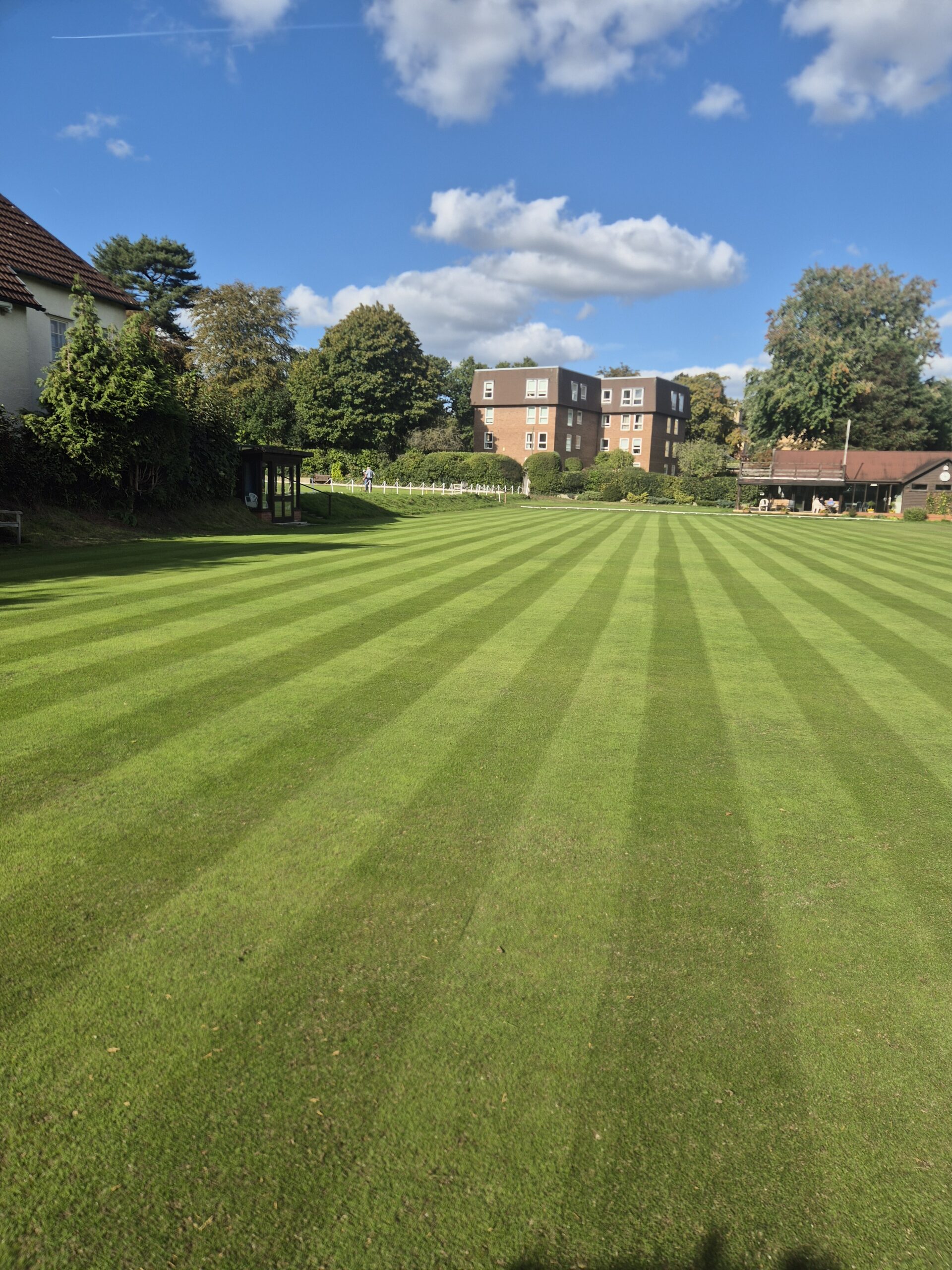
These images provide a useful demonstration of the stages involved, from the disruption of the initial work through to the return of a more uniform grass surface.
Thanks to Ian for documenting the process so thoroughly.
Different Greens, Different Approaches – The Same Objective
Looking through these contributions, one thing becomes very clear.
No two greens are exactly alike.
They have different soil textures, different histories, different problems and different resources available to maintain them.
Some are cared for almost entirely by volunteers. Others benefit from professional contractors and specialist machinery.
Some have reliable irrigation systems, while others depend much more heavily on the weather.
And the renovation methods differ too.
There’s no great value in copying an operation simply because another club carries it out every September.
The more useful question is what that operation is intended to achieve, and whether it’s appropriate for the green in question.
That’s really the thinking behind much of what we do at Bowls Central: understanding the soil, understanding the grass and making decisions based on what the green actually needs.
The photographs shared here aren’t controlled experiments, and they don’t prove that any particular method or product is responsible for a particular result.
What they do provide is something equally useful: a glimpse into real greenkeeping practice, with actual people carrying out the work and observing the results.
And that’s worth sharing.
Now I’d Love to See What You’ve Been Doing!
This collection doesn’t have to end here.
If you’ve been carrying out autumn renovation work on your bowling green, I’d love to hear from you.
You don’t need to write an article or prepare a detailed report. A few photographs and a handful of words explaining what you’ve been doing would be absolutely fine.
Perhaps you’ve been hollow-tining, scarifying, overseeding or experimenting with NotDressing. Maybe you’ve tried something different this year, or you’re beginning to see improvements after several seasons of working on your soil.
And please don’t feel that your green needs to look immaculate before you’re willing to share it.
In fact, if things haven’t gone entirely to plan, your experience could be particularly valuable to someone else.
What worked? What didn’t? What surprised you? What might you do differently next time?
Sometimes those are the most useful lessons of all.
If possible, include a photograph from before renovation, another during the work and one showing how the green is recovering. But whatever you’ve got, please don’t hesitate to send it.
With your permission, we’ll continue sharing selected contributions through Bowls Central so other greenkeepers can see what you’re doing and learn from your experiences.
Because the more we share what we’re learning, the better informed we all become.
A sincere thank you to David, Alan, Phil, Ian and everyone helping to look after our bowling greens.
Keep the photographs and stories coming!
John Quinn
Bowls Central