
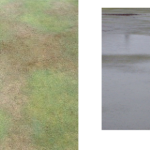
Localised Dry Patch is a common problem on greens in summer and it can take a while to conquer it. Could some of our traditional management practices be making it worse?
Localised Dry Patch is a common problem on greens in summer and it can take a while to conquer it. Could some of our traditional management practices be making it worse?

New Granular Soil Surfactant for Professional Turf Use
A new high-performance surfactant with RST technology, combined with dispersible granule technology, produces outstanding performance and reliability.
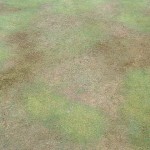
Across the UK this summer, bowling greens are being baked in the intense summer heat. Weeks of hot, dry weather have left surfaces bare, cracked, and rock-hard. For many clubs, the underlying soil has crossed into a more serious condition — hydrophobicity — where the soil physically repels water, a phenomenon known as Localised Dry Patch.
If that’s where your green is today, you’ve got a problem.
You can simply can't wait until your usual mid-September renovation

Yes, I'm thinking about Autumn already. Why?, It's all to do with the devastating effect of Localised Dry Patch on many greens this year. I've ever had so many people get in touch. It looks like the more regular occurrence of extreme heat and long dry spells is demonstrating the problem of excessively sandy rootzones, much better than I could ever hope to explain...
Soil sampling will reveal powder dry soil. Unsightly brown patches of turf start to spread over most of the green. The turf on these areas recedes causing a bumpy surface and in most cases the weakened grass will be taken over by moss. But what can be done to cure the problem?