


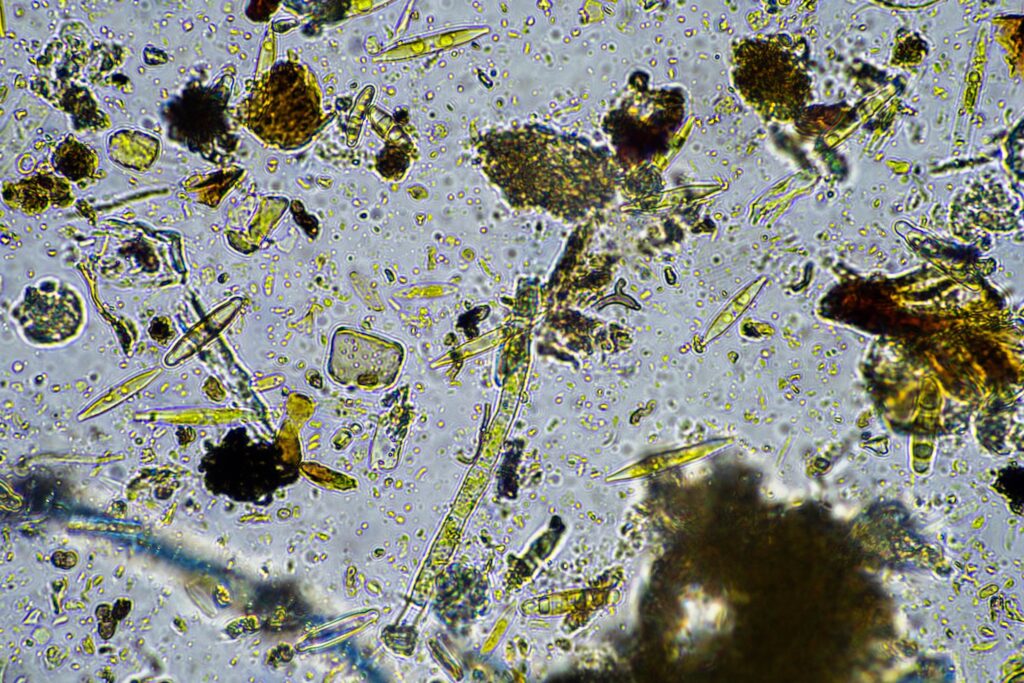
For years now, I’ve had greenkeepers asking me the same question.
“Is there a way to get the benefits of compost tea without having to brew compost tea?”
It is a fair question.
Compost tea can be a brilliant tool when it is brewed well, applied fresh, and used as part of a wider Soil health programme. But there is the catch.
It needs the right compost.
It needs the right brewer.
It needs clean equipment, water management, aeration, timing, temperature control and consistency.
And perhaps most importantly, it needs someone with the time and confidence to make it properly and apply it regularly enough for it to make a difference.
That is where many bowling clubs fall. Not because they are doing anything wrong. Simply because most bowling greens are looked after by volunteers, part-time greenkeepers, or committees with a hundred other jobs to do. The intention is there. The interest is there. But the practical set-up for proper compost tea brewing often is not.
That is why I’ve put together the New Biology Bundle.
It is designed as a practical, easy-to-use biological boost for bowling greens — a compost tea alternative for clubs that want to support Soil biology, encourage stronger perennial grasses, improve rooting, and start building a more resilient root zone without the fuss of brewing.
Why biology matters in a bowling green
A bowling green is not just grass sitting on sand, at least, it shouldn’t be. A good green is a living system.
The grass plant, the rootzone, the thatch layer, the microbial population, the organic matter, the moisture, the air spaces and the mineral content are all interacting with each other every day.
When that system is working well, the green becomes easier to manage. Roots are stronger. Nutrients become more available. Organic matter is broken down more efficiently. Moisture is held and released more evenly. The fine perennial grasses are better able to compete.
Disease pressure tends to become less of a panic situation and more of a management issue, but when biology is weak, the opposite happens. Thatch builds up into a thick matted layer instead of being converted into Humus. Dry patch becomes more common and more stubborn to deal with. Disease scars are slower to heal. Nutrients can be present in the Soil but not properly available to the plant. The green becomes more dependent on fertiliser, Iron, wetting agents, fungicides and constant firefighting.
That is the trap I’m always trying to help clubs avoid. The answer is not to keep hammering the symptoms. The answer is to build a healthy Soil ecosystem.
What the New Biology Bundle is designed to do
The New Biology Bundle has been put together to give clubs a straightforward way to apply beneficial biology and biological food sources in one simple tank mix. It is not a replacement for good greenkeeping; nothing is.
It will not compensate for neglect, compaction, poor irrigation, excessive thatch, weak nutrition, or a lack of aeration, but used properly, it gives the green a regular biological nudge in the right direction.
The bundle contains three complementary materials:
Gaia Complex Tea Plus
A soluble powder containing a broad range of beneficial microorganisms designed to help re-populate the turf, Soil, and root zone.
GaiaTabs
Effervescent biological tablets containing selected cultures of beneficial bacteria and fungi in a simple, convenient form.
Gaia Boost Plus
A rich food source for Soil biology, containing amino acids, organic matter, humic and fulvic acids, fermented molasses, macro and micronutrients.
In plain English, the idea is simple. We are introducing beneficial biology and giving that biology a food source. And we are applying it in a way that suits the real world of bowling green maintenance.
No brewer. No complicated set-up. No waiting for a tea to be ready. No wondering whether the brew has gone wrong. Just a practical tank mix that you can build into the greenkeeping programme.
Why this is useful after stress
Bowling greens go through a lot of different stresses. Cold Soil in spring, drying winds, localised dry patch and heavy play with the resultant compaction and renovation work. Fusarium scars, thatch build-up, frost damage, chemical residues, periods of drought followed by heavy rain, and the list goes on… all of these things can knock back Soil biology.
That does not mean the Soil is dead. I try to avoid that phrase because it is usually an exaggeration. But it does mean the living part of the root zone can become weakened, simplified, or pushed out of balance.
When that happens, the green loses some of its natural resilience, the grass plant has to work harder, the roots are less supported, the breakdown of organic material in the Soil slows down, and the surface becomes more prone to holding moisture in the thatch while remaining dry beneath it.
That is the strange contradiction we see so often on bowling greens. A surface that looks damp, mossy or greasy, but a rootzone underneath that is dry, hydrophobic and biologically poor.
The biology bundle is designed to help with that wider picture.
Not as a one-off miracle treatment, but as part of a repeated programme to support recovery and strengthen the soil-plant system.
Thatch
One of the biggest misunderstandings in bowling green maintenance is that thatch is simply a physical problem.
It is physical, of course.
Too much undecomposed organic matter at the surface will affect trueness, firmness, moisture movement, rooting and disease pressure.
But thatch is also a biological problem.
In a healthy system, dead and dying plant material is continually being broken down and recycled. Microorganisms play a key role in that process. They help convert raw organic material into more stable humus-like material that can improve moisture and nutrient retention.
When biological activity is weak, that recycling process slows down.
The greenkeeper then sees the symptom: a thatchy, spongy, moisture-retentive surface.
The usual response is to attack it mechanically. Scarify it, topdress it, dry it out, Iron it.
There is a place for mechanical work, but if the biology in the Soil is still weak, the same problem keeps returning. The better long-term approach is to combine sensible physical work with biological support.
That means aeration, moisture management, avoiding unnecessary chemical disruption, and feeding the Soil biology, not just feeding the grass itself.
That is where this bundle fits.
How to use it
For a typical bowling green of around 1500 square metres, the three products are tank mixed and applied together using the guide on the product page.
The bundle contains enough material for up to 10 full bowling green applications.
The ideal timing is once or twice monthly between March and November, when Soil temperatures and growing conditions give the biology a better chance of activity.
For best results, apply after pencil tine aeration or sarrel rolling. That helps open the surface slightly and allows the application to move into the zone where it is needed.
Moisture is important. Biology needs water. In dry conditions, irrigate before application or shortly afterwards. Applying biological materials to a bone-dry, hydrophobic surface and expecting them to work properly is wishful thinking. Get the rootzone receptive first by applying natural BioActive Yucca with your irrigation water.
Where it fits in the wider greenkeeping programme
This is not a standalone greenkeeping programme, but a tool to develop a strong biological profile within the rootzone. It sits beautifully alongside the work many clubs are already doing with natural wetting agents, seaweed, humic substances, sensible low-salt nutrition, aeration and thatch reduction.
Think of it as part of the soil-building side of the programme. If the green is struggling with localised dry patch, use it alongside proper re-wetting work.
If the green is thatchy, use it alongside aeration and thatch reduction. If the green is weak after disease, use it as part of the recovery plan.
If the green is overly dependent on fertiliser and Iron, use it to start shifting the focus back towards Soil health and resilience.
The point is not to add more complexity. The point is to make the green simpler to manage over time. That has always been the aim of natural greenkeeping. Not less greenkeeping, just better greenkeeping.
A word on compost tea
I want to be clear about this as a lot of Bowls Central members are Compost Tea advocates.
A well-planned and executed compost tea programme is still the best thing you can do to improve Soil biology. When the compost is good, the brewer is clean, the water is right, the oxygen is right, and the tea is applied fresh, it can be a powerful biological tool.
But that is a lot of variables, and for many bowling clubs, those variables are the reason compost tea never quite becomes a routine part of the maintenance programme.
The New Biology Bundle is for those clubs.
It gives you a practical route into the same broad area of work: beneficial microorganisms, microbial food sources, plant support and a focus on improving overall Soil health and function. It is not about throwing “bugs in a bottle” at a green and hoping for the best.
It is about recognising that bowling greens are living systems and treating them accordingly.
The aim
The real aim is not simply to apply biology, but to create the conditions where biology can thrive.
This needs air, moisture, strong roots, fully stabilised organic matter (Humus), sensible nutritional inputs, and minimal chemical pressure—all in all, regular inputs that support the life in the Soil rather than disrupt it.
The New Biology Bundle is a simple way to begin doing that more consistently.
For clubs that have wanted to try compost tea but never quite had the time, equipment or confidence to brew it properly, this is the practical alternative. A straightforward tank mix. A full-season biological boost. A better way to support the living root zone beneath your bowling green. And in the long run, that is where better greens are made.
Not just at the surface, but underneath it.



New Biology Bundle (Compost Tea Alternative)
A lot of bowling greenkeepers simply don’t have the time or facilities to brew compost tea regularly enough for it to make a real difference. As a result, I am frequently asked if there is an effective alternative that is easy to use and avoids the brewing process and set up, hence the New, Biology Bundle!