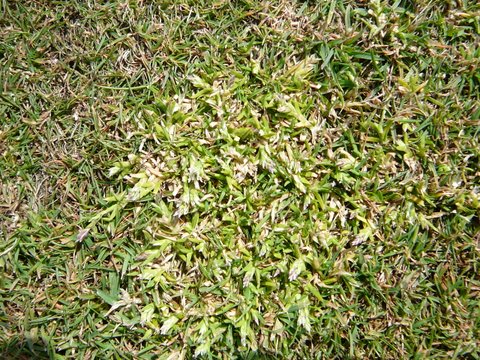
Today we'll try to get a better handle on Soil Texture and discover how some of the soil fractions come about. In particular we will look at the complexity of sand, before getting a better understanding of how soils are formed in the first place. This will help us to understand the importance of sand in bowling green maintenance, but hopefully also to understand more fully, its limitations.
Category: Greenkeeping
Bowls Green Soil Texture part 1.
This subject is so important to the future performance of bowling greens that I would say it is essential for greenkeepers to understand this subject over any other.
The physical condition of the soil in the bowling green is the most important aspect of bowling green maintenance because it impacts every other aspect of green management. The physical properties of your soil dictate everything from drainage, nutrient availability and pH right up to green speed, green smoothness, consistency and ultimately whether or not the green performs to a high standard.
But what do I mean when I say Soil Physical Properties?
Recuperative Potential in Fine Turf, essential Spring greenkeeping knowledge
Recuperative potential is, in simple terms, the green’s ability to recover from stress, wear, disturbance or damage. It is the green eco-system’s capacity to bounce back. The higher the recuperative potential, the more confidently the green can cope with maintenance operations, play, environmental stress and general pressure. The lower it is, the more likely it is that even sensible work can push the turf backwards rather than forwards.
Turfgrass Physiology; Diffusion, Transpiration & Osmosis
Today, we will look at two mechanisms of turfgrass physiology that are active in our grass plants and soil and that follow this tendency towards equilibrium, without which our turf wouldn't be able to grow and thrive.
Unlocking Consistency: How Liquid N Slow Release Supports Superior Bowling Green Performance
Nitrogen is essential to turfgrass performance—it drives growth, colour, and density. But too much or too little, applied at the wrong time or in the wrong form, can do more harm than good. Spikes of growth followed by periods of stress are all too common with traditional nitrogen sources, especially on fine turf where consistency is king.