
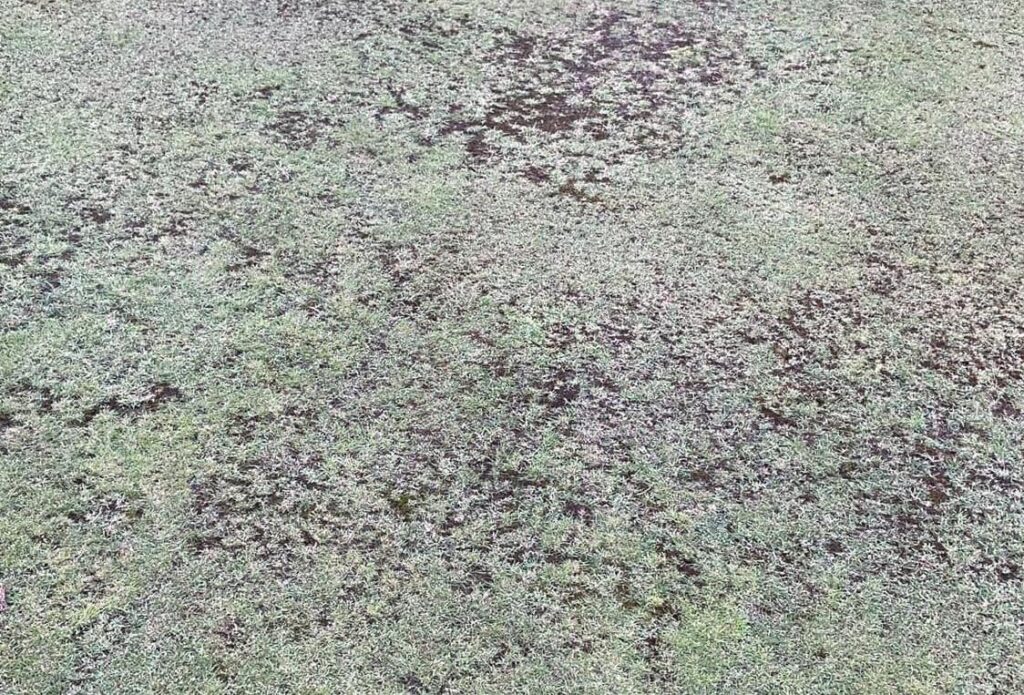
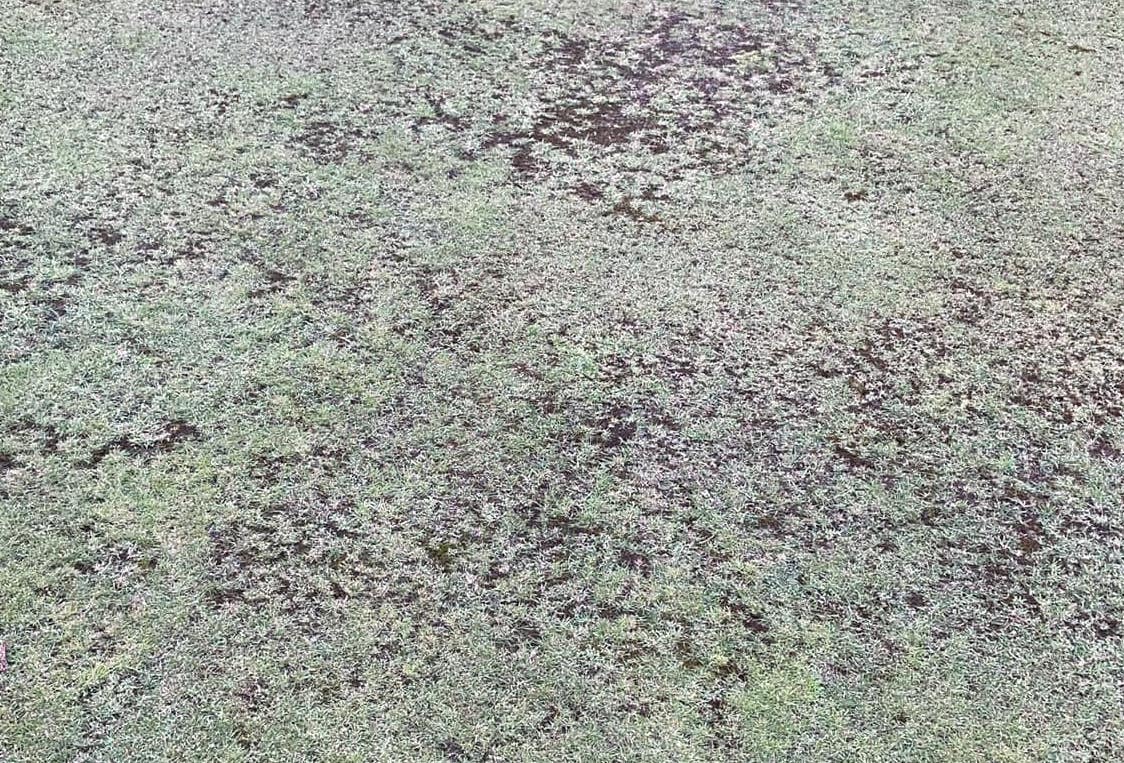
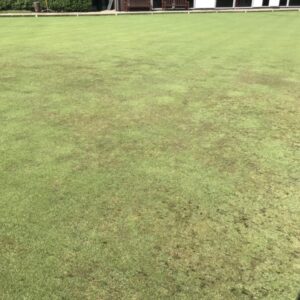
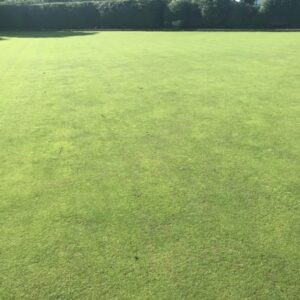
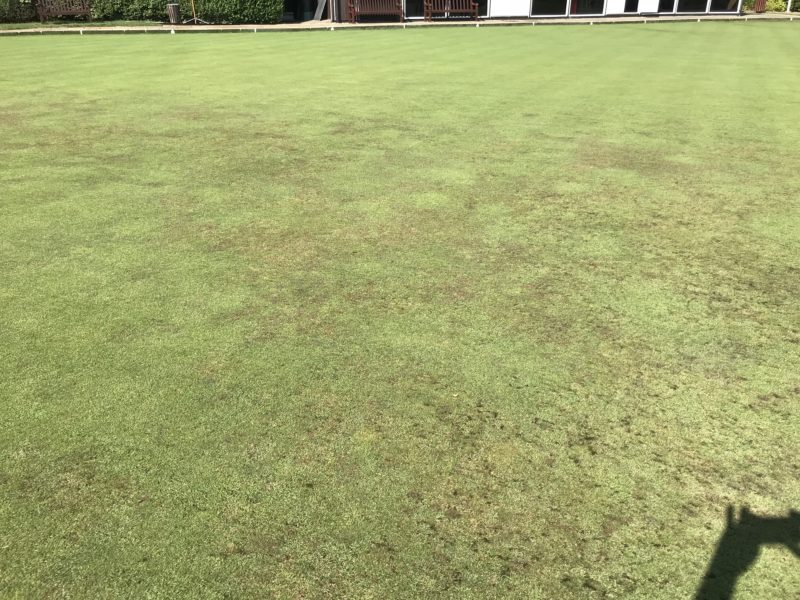
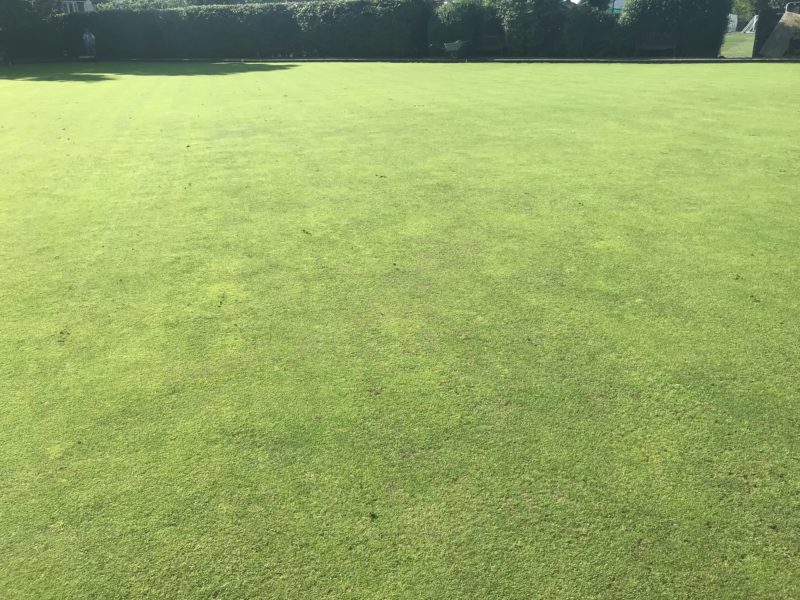
I’m getting a lot of photos like the one above at the moment asking what can be done about this persistent Moss. However, although there is moss present, the real problem is that the grass is very weak in these areas and unable to compete with the moss, much of which has already been blackened by ferrous sulphate in an effort to kill and remove the moss.
The underlying problem is that the soil is suffering from Localised Dry Patch (LDP), which is always lurking in the background due to the very high percentage of sand in many UK greens. It’s showing up remarkably early this year due to a cold, dry spring in many areas and it is important to get on top of it now to minimise the surface disruption in can cause mid season.
Localised Dry Patch (LDP) is a common problem on greens in summer and it can seem like an un- fixable and perennial headache for the greenkeeper.
LDP seems to just appear overnight on your green and it can devastate a club’s entire bowling season. It is also the issue that finally helps clubs to start understanding that some of the greenkeeping they’ve been doing is detrimental to green performance.
LDP doesn’t go away easily and it doesn’t even go away when it appears to have gone away. The effects of it are masked somewhat by the prolonged wetting of winter, only for it to reappear in June, or earlier as we are seeing this year, seemingly without warning, so right now is the time to start dealing with it permanently if you’ve had this problem before.
Common Early Symptoms
Common symptoms that you might not immediately associate with LDP include:
- Large areas of moss infestation due to loss of grass cover
- Bumps and hollows appearing on the green surface in random locations
- Relatively sudden changes to the playability of certain rinks
- Variations in green speed along a rink (slow and fast spots)
- Fairy rings
- Toadstools/mushrooms appearing on the green
What does LDP do?
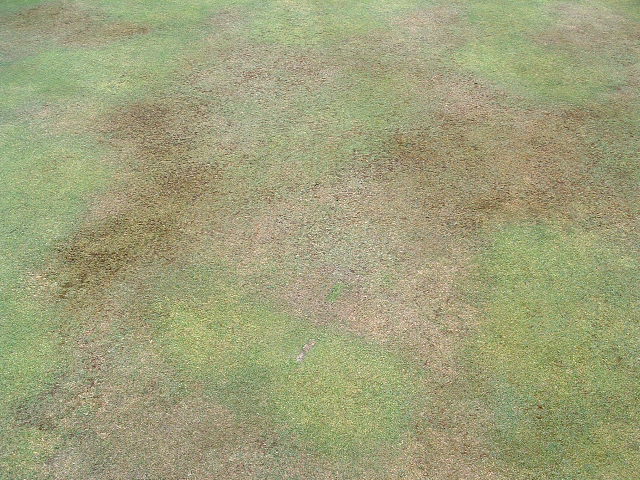
LDP causes large areas of turf and even whole greens in extreme cases to resist moisture. The soil has become Hydrophobic. Water will lie on the green surface for a long time and the soil underneath will remain powder dry and unable to support plant life.
The result is large brown patches on the surface where the thatch eventually dries out so much that it becomes hard and brittle. At this point it will shrink to below surface level, causing large pans of low lying turf which of course affect the performance of the green to a level that is unacceptable. Temporary measures such as sarrel rolling, hand watering and wetting agent
application can help to get water into the green, but the water still wont adhere to the soil particles below making sure that most of the irrigation water runs straight through to the drains.
Natural Dry Patch Solutions
Of course, wetting agents alone are rarely the permanent answer to Localised Dry Patch. With many greens being beyond Peak Sand, a longer term and more relentless approach is required to allow soil microbial activity and a certain level of humus to build up in the sandy, inert soil. With this in the forefront of our minds, we must approach the problem by thinking about how we repair the soil along with the eradication of LDP, without using harsh wetting agents, which as we’ve seen from some of the research are sometimes thought to have a detrimental effect on soil microbiology. It makes sense then, that we try to close the circle and try to use a kinder, organic solution to overcoming LDP in the longer term. One approach to this is to use a Combination of AquaStasis and BioActive Yucca.
Natural Yucca Wetting Agent and BioStimulant
You can now apply a high performance Natural, non chemical wetting agent in your LDP recovery programme.
BioActive Yucca is a super concentrated plant extract acting as a combined wetting agent and BioStimulant
BENEFITS
- Breaks down the waxy coating that prevents water from entering the plant
- A plant sugar based surfactant that also stimulates soil microbes and increases the health of your soil
- Can be tank mixed with BioStimulants, liquid fertilisers & trace elements
- Non-phytotoxic
- Economical to use, with each 5 litre pack providing up to 15 full size bowling green applications
BioActive Yucca breaks down the waxy coating that prevents water from entering the plant roots, allowing water to enter the plant in the same way as conventional wetting agents. This natural sugar based surfactant also stimulates soil microbes and enhances the uptake of nutrients, whilst promoting a healthy soil profile.
BioActive Yucca is a purified plant extract derived from Yucca schidigera. Providing an ideal alternative to synthetic surfactants and wetting agents.
How to apply:
Application rate: 350ml in 75 to 150 litres of water or tank mix other applications compost teas/biostimulants/bio-fertilisers
- Apply at least monthly or spot treat affected areas as required
- Apply as a soil drench.
- Add to tank last if mixing products. After mixing with water, apply as soon as possible
- This highly concentrated form of Yuccah schidigera based wetting agent, prevents the occurrence of hydrophobic conditions in bowling green rootzones and aids the spread and retention of irrigation and bio fertilisers. BioActive Yucca causes minimal stress to plants and soil biology and acts as a biostimulant. Its low pH helps to maintain slightly acid conditions in growing media and it is suitable for use with compost teas.
When used regularly, BioActive Yucca can prevent the development of hydrophobic conditions to ensure the even distribution of irrigation water and added fertilisers throughout the profile of soil and rootzones. Unlike many inorganic wetting agents, BioActive Yucca does not stress or kill natural soil biology but acts as a biostimulant to boost the populations of beneficial soil microorganisms.
BioActive Yucca has a moderately acid pH and helps to maintain the slightly acid pH required by the fine perennial grasses. As a biostimulant, BioActive Yucca can be used with compost teas and other microbial – based products.
BioActive Yucca is a premium wetting agent, which can be used with inorganic and organic fertilisers and is ideally suited to spray tank mixing with Compost Teas and Mycorrhizal Inoculants.
AquaStasis
- A long-term solution to Localised Dry Patch giving rapid gains in summer sward quality
- Our solution aims to cure the causes not just remove the symptoms of dry patch
AquaStasis a new development in dry patch management. Many turf managers experience a hydrophobic layer 4-6cm thick occurring just below the thatch layer. It often occurs in conjunction with or near fairy rings, and causes weak grass susceptible to disease and wear that many wetting agents cannot reach.
The hydrophobic layer is caused by organic hydrophobins excreted by fungi that coat the soil particles. The bacteria in AquaStasis are chosen for their ability to digest these hydrophobins and outcompete the fungi for nutrient, removing the cause of the problem.
CONTENTS AquaStasis contains bacteria chosen for their ability to break down the organic hydrophobins secreted by soil fungi which cause dry patch.
APPLICATION AND TIMING……………………….
For an average Bowling Green. Tine the area to be treated and apply 750g of AquaStasis in 75-150 Litres of clean water. Pre-dilute in warm tepid water before adding to the tank.
Use wide nozzles on your sprayer. For best results mix with BioActive Yucca Natural Wetting Agent. Keep the spray tank agitated during application.
Apply weekly if necessary or spot treat as required.
AquaStasis may be used to spot treat local areas of dry patch. Tine the area to the depth of the hydrophobic layer and apply by knapsack sprayer or watering can.
AquaStasis produces protease enzymes which degrade the white hydrophobic proteins secreted onto soil particles by the basidiomycetes fungi commonly found in Fairy Rings. The hydrophobic layer is usually found just below the thatch layer 2cm-6cm deep
SPOT TREATING Tine the area as much as possible to the bottom of the hydrophobic layer. Use 750gms AquaStasis for an average size bowling green. Mix BioActive Yucca Natural Wetting Agent natural wetting agent with the AquaStasis solution. Repeat as Fortnightly until recvery is underway and then reduce to monthly applications until late Autumn.
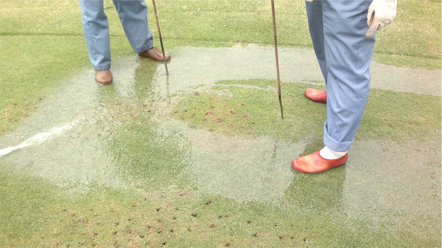
Step by Step Application Guide for AquaStasis and Yucca – the power combo against LDP
How to Use AquaStasis
For best results use AquaStasis with BioActive Yucca Natural wetting agent and proceed as follows:
- Tine the area to be treated.
- Apply 750g AquaStasis in at least 75 litres of water. Pre-dilute AquaStasis in tepid water before adding to the sprayer tank.
- Fill the sprayer tank with water leaving just enough room for the prepared AquaStasis and BioActive Yucca Natural Wetting Agent
- Keep the spray tank agitated during application and aim to apply in two passes at right angles to ensure even coverage. The product quantities should be evenly split across the number of sprayer tanks it will take you to cover your green…more water is better than less
The minimum water rates are important, so depending on sprayer size you might have to split ingredients over more than one sprayer tank
Repeat application after 5 days and stay vigilant for signs of recovery and/or further dry patch areas.
**Water is Essential for AquaStasis to work, so if it remains dry after application you will need to hand water affected areas frequently**
This process can be repeated weekly thereafter if necessary or spot treat as required.
AquaStasis may be used to spot treat local areas of dry patch. Tine the area to the depth of the hydrophobic layer and apply by knapsack sprayer or watering can.
AquaStasis produces protease enzymes which degrade the white hydrophobic proteins secreted onto soil particles by the basidiomycetes fungi commonly found in Fairy Rings and in Localised Dry Patch affected areas. The hydrophobic layer is usually found just below the thatch layer 2cm-6cm deep.
Recommended Wetting Agent is BioActive Yucca Natural Wetting Agent