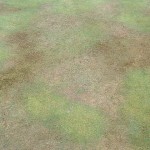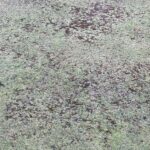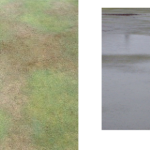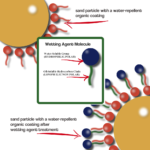
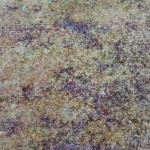
The management of bowling greens often presents complex challenges, one of the most prevalent being the occurrence of localised dry patch (LDP) due to hydrophobic soil conditions. Addressing this issue effectively is crucial for the health and performance of your green and wetting agents have emerged as a key tool in this endeavour.
However, concerns have been raised about the potential toxicity of commonly used chemical wetting agents, leading to a call for safer, more environmentally friendly alternatives.
Only Academy Members can access this post. If you are an Academy Member, please log in to access the full post.
Some wetting agents are made from harsh chemicals that can be harmful to the environment and potentially toxic to humans and animals. However, wetting agents made from biodegradable and environmentally friendly ingredients are available. These products are designed to be safe for use around people, pets, and wildlife, and they break down naturally in the soil over time, leaving no harmful residues behind.
There comes a point in every long-running problem where the evidence becomes too obvious to ignore. For many of the bowling clubs that get in touch to ask about solving green performance problems, I think they are now at that point with sand.
After another summer of heat, dry patch, weak turf, hydrophobic soil, disease pressure, uneven surfaces, irrigation panic and increasing renovation costs, the question can no longer be: “What top dressing are we putting on this autumn?”
Combined granular moisture-management and rootzone-improvement treatment containing ProWet Evolve RST surfactant and Leo-Zeo Turf. Three bags treat a standard 1,500 m² bowling green while simultaneously adding 60 kg of leonardite/zeolite rootzone amendment.
Localised Dry Patch doesn’t disappear just because summer is ending. Evolve G Granular Wetting Agent is the perfect addition to our NotDressing autumn renovation programme, helping autumn rainfall penetrate stubborn hydrophobic areas and continuing the work on LDP quietly in the background through the wetter months, before next summer exposes the problem all over again.