
Home » thatch » Page 7

Tag: thatch

The Circle of Decline—why many bowls greens never improve.

The diagram below shows the process that many poorly maintained bowling greens experience over a period of years if 3 basic maintenance issues are not addressed as a priority.

The top 3 issues on all fine turf are:

1. Thatch Control

2. Compaction Control

3. Turf Nutrition
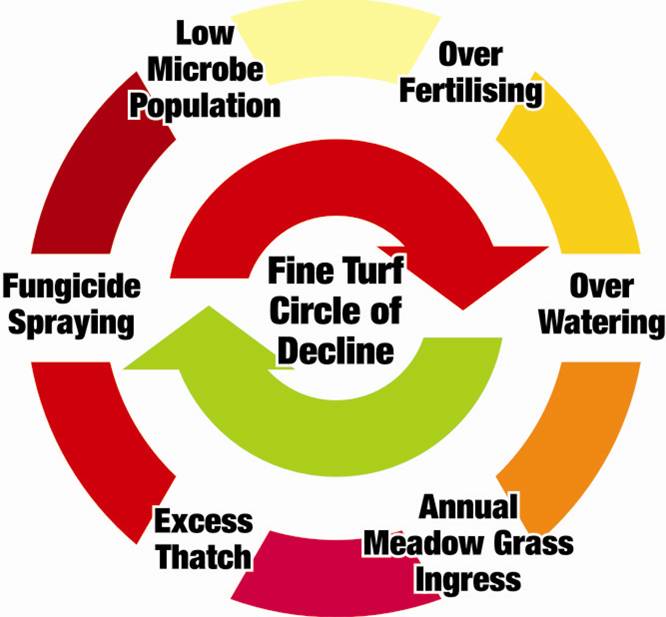
the Circle of Decline, the reason many greens never improve

In addition to the top 3 there are of course other important issues such as irrigation management, topdressing etc, but if these 3 big issues are under-managed then the green will spiral into what I have called the Circle of Decline.

Simply put this is the course of events that go on largely un-noticed by many bowling clubs until it is too late to effect a quick recovery.

A lack of attention to thatch build up (see other posts under the thatch category) results in a thick mat of un-decomposed  dead grass shoots, roots and leaves. This mat gradually effects the turf’s ability to put down roots and take up water and nutrients. In advanced cases a root break will occur and Localised Dry Patch is a very common symptom of excessive thatch also (see other posts under the LDP category)

Disease

In winter, thatch can hold water like a sponge and encourage fungal diseases such as fusarium patch to take hold. This sometimes results in over use of chemical fungicides which kill off the disease and many beneficial fungi into the bargain.

Symbiosis

Grass relies on beneficial microbes, such as fungi to make best use of the available nutrition and so begins to have difficulty obtaining the necessary nutrition from the soil.

This often results in over fertilisation, as much of what is applied is not made available to the plants due to the anaerobic conditions which now prevail.

By now conditions are highly favourable to the weed annual meadow grass which is a very shallow rooting species. The finer fescue and bent grasses are compromised and in an effort to keep the meadow grass alive excessive irrigation is required.

This contributes even further to the excessive thatch layer as meadow grass is a prolific producer of thatch and we are back to the beginning of the cycle.

Action must be taken to break into the circle of decline, take action before its too late for your green.

Deal with thatch and compaction Now

Regular readers of my articles will know my views on bowling green maintenance problems; essentially there are only 2 that you have to worry about.

Everything else that goes wrong with greens is a symptom of these big 2 issues or indeed a symptom of the commonly held views on how to tackle the big 2.

What are the big 2?:

  1. Thatch: the build up of dead shoots, roots and debris on the turf surface that can get out of hand very quickly and cause or contribute to a huge number of problems. See my article on the circle of decline here
  2. Compaction: the squeezing of air out of the soil profile by foot and maintenance traffic.

Why I am banging on about this again?

Well hopefully your autumn and winter program is fully geared up to dealing with these two big issues.

By now I hope you have undertaken any major thatch removal work required and that you are now embarking on “an all winter long” attack on compaction.

Regular deep slit tining is the best way to relieve compaction; please note this is not a one off job regardless of how impressive the machine used.

It is necessary to continually slit tine the green through the winter to a depth of 150mm or deeper if you can.

Once a week isn’t too much, twice a month is more typical; stop during frost or excessively wet conditions but pick it up again as soon as possible afterwards.

For a full appraisal of essential winter maintenance tasks for your bowling green the Autumn/Winter report is still available at half price:

Autumn and Winter Bowling Green Maintenance Guide
The ultimate guide to Autumn Renovation and Winter Bowling Green Maintenance detailing the essential maintenance your bowling green needs through this most critical of maintenance seasons. What you do now will determine how the green performs next season. INSTANT DOWNLOAD ebook more details
Price: £9.97

Bowls Green Spiking

Slit tining, solid tining, hollow tining, verti-draining. All of these terms seem to be interchangeable with the word “Spiking” so it can be confusing for the new greenkeeper or green convenor to know what the best approach is at any given time to do the best for their green.

All of these terms relate to the aeration or introduction of air in the green. They all do this by making holes of one kind or another.

When I refer to spiking I usually mean “slit tining” and this is still the best thing you can do to your green through the winter months to relieve the compaction that has built up over the playing season and to keep the green surface open to allow drainage of surface water.

You can get much more detail on the aims of aeration and the techniques used here.

What does top dressing a bowls green do?

In spite of the common misconception that it does a lot of good and that it is an essential part of annual bowling green maintenance, in broad terms it does very little of good towards levelling the surface, drains club’s of much needed cash and actually causes untold damage to the green eco-system over time.

There are many more articles detailing the reasons for this conclusion here.